Rescuing “Starbucks” the Jack Russell Terrier

Jack Russell Terrier Picture GPA
“Starbucks”

Jill and I were just getting ready to leave Pet Smart about 5:00 pm on a cold Tuesday evening. Our rescue Group, Green Pets America is usually only at this Pet Smart in Canton, Georgia on Sundays, but we were here because I was making a special effort to get one of our lovable rescues a new home. This special rescue was a big scared lab and he needed a permanent home to feel safe and really loved again. So as we left I loaded Sam, the big goofy yellow lab in Jill’s little eco car and walked back in the store to make sure we left nothing behind.

All of a sudden this young guy comes running in with a little white and brown Jack Russell Terrier. The little dog was shaking and his leg was sticking out looking like it may be broken. Jack Russell’s are funny and crazy and always wired up. They all seem to be caffeine hyped 10 Starbucks ahead of all the other dogs we rescue.

The kid asked if I was “the rescue guy” that came on Sundays. I said yes. He immediately said he was in a hurry and was late to work, but I needed to take this dog. He said he was driving to work on the highway right near us and saw this little Jack Russell jump out of a car onto the highway and scamper to the side of the road. So this kid, I was referring to him in my head as “Lying Dude” said he turned his car around and picked him up and drove him here for someone to take him. I know I may seem coarse but we hear all kinds of reasons when someone wants to give up their dog. So I was hoping he was really a Good Samaritan, but skeptical that he may also just want to get rid of his own dog.

As we talked “Dude’s trying to get out of the store as quickly as possible. I’m holding the little scared dog…with his lease attached to his collar. So, I had to ask. When “Jack” jumped out of the moving car, did he have this leash on him at the same time?

He looked at me for a second, kind of dumb founded and said; yup he jumped with the leash as well.  We talked a bit and just as he was leaving I said to him, looks like this poor dog he hasn’t eaten in a while. “Dude” said, no he ate this morning and ran to his car. So much for “Good Samaritan”

The truth is I am glad “Dude” did bring him to our rescue group at Pet Smart. He actually did the right thing. Sometimes “Dudes” abandon their dogs in the woods. Little house trained dogs just don’t survive long on their own. Or had he taken him to a shelter, as an owner turn in, with a broken leg as well, the little guy would probably be immediately euthanized. Many shelters feel if you as the owner turn in your own dog, the dog must have bad issues and they won’t readopt them, they euthanize them. Also, most shelters are community, tax payer funded kill shelters. As such most do not receive sufficient local government funding to surgically fix all the dogs abandoned.

So, “Starbucks” as I started calling him was saved. He was taken to a No-Kill Rescue Group. Our Tag line at Green Pets America is…Rescue – Recycle – Relove. Little Starbucks was now rescued. Over a couple of months in a Green Pets foster home he would be Recycled and made new. And when little Starbucks got adopted, which he did, he became reloved.

If you love dogs, please what ever you can to help your local rescue no-kill groups and local animal shelters. Volunteer at your local community animal shelter, or donate a small amount of money to a local rescue non-profit group like ours so they can rescue more little ones like “Starbucks” and get them Rescued – Recycled and Reloved into new homes.

P.S. Sam, the big goofy yellow Lab I had taken a special interest and took to Pet Smart that day also got adopted. My son Stephen and his wife Trish adopted him a couple of weeks later. He now lives happily after ever with four of their other rescued dogs. It seems rescuing dog’s runs in the Monahan family.

Donate Button


DONATE BUTTON

HAPPY RESCUE DOG STORIES – SWEET`PEA

A Very Yappy Ending.Sweet Pea Picture


I often wonder where she was born, what she was like as a puppy and why she became abandoned. She is just the most serene, and cutest pure bred miniature dachshund you could lay your eyes on. Your heart melts when she looks up at you with her big brown eyes. When I am in her company my energy is at peace. Like a clear lake top, peaceful and serene.

Our rescue group Green Pets America rescued Sweet Pea. She was left behind for some unknown reason in her empty home. Worse yet she was abandoned with her two puppies as well. They were just the most beautiful and adorable little family. We’re not sure if her owners were foreclosed on and left the 3 behind or if they went to jail. I can’t tell you how many times this is how we have wound up rescuing a dog.

I and our group used to cart Sweet pea and her puppies, along with a dozen of our other rescue dogs every Sunday to Pet Smart, where we would try to find them new loving homes. It is not easy work rounding all the dogs up, getting their cages in the pickup and cars and unloading them and setting up the puppy play pen and adoption table… but it’s a work of love. It allows us to be with these wonderful rescues and meet fellow pet lovers. And when we get one adopted we’re happy, but also sad to see them go. These little and sometimes big brutes become your kids.

Well after a few weeks both of Sweet Pea’s puppies did find new homes. I’d like to say they lived happily ever after, but one suddenly died shortly after adoption. Seems the little guy, being a nosy puppy opened the door under the families sink and ate some drain cleaner and died. I must tell you we all cried. I just don’t know why things like that happen in life. This poor little guy had a rough start and a rough ending. Thank God however when he was with us, he had a wonderful and happy middle. If you have pets please baby proof your home. These little ones are curious and will always be looking for new adventures. Please, please keep them safe.

Well with both puppies adopted we still had Sweet Pea. My wife started to really bond with her and one Sunday when I was heading off to Pet Smart Lynne said, “if she doesn’t get adopted today please lets take her ourselves”.

Well as life would have it just at the end of the adoption event a woman came up to one of our Directors and wanted to see Sweet Pea. So Susan took her out of the small dog play area. I watched the ladies eyes and in a flash I saw the woman immediately take to Sweet Pea. Adoptions are like that. There seems to be an immediate connection. Well I did something I never did before. I ran over and scooped little Sweet Pea from Susan’s arms. Susan looked at me like I was crazy I guess. But, my heart said that I had to step in and take Sweet Pea home that minute. I just could not bear to possible put her in a situation like what happened to her puppy. After 8 weeks of being with her I couldn’t let her go.

I put her in my car right that minute. After we packed up the pound puppies and big brutes as well Sweet Pea came home to live with us and our other three rescue dogs forever.

I have never regretted my crazy or rude act of sweeping her away and taking her home.

She is the calmest of all our rescues and she’s also the peace maker of the pack. Sweet Pea like all our rescued dogs is a true gift from God. They give everything and ask only for love and protection in return.

For Sweet Pea Monahan and for the whole family it was a Very Yappy Ending...


Steve Monahan, founder

Green Pets America.org

Rescue Renew Rehome

cropped-gpalogo88.jpeg

Please make a donation today.

You will help write another happy ending for a homeless pet sitting in a shelter today.

Donate Button

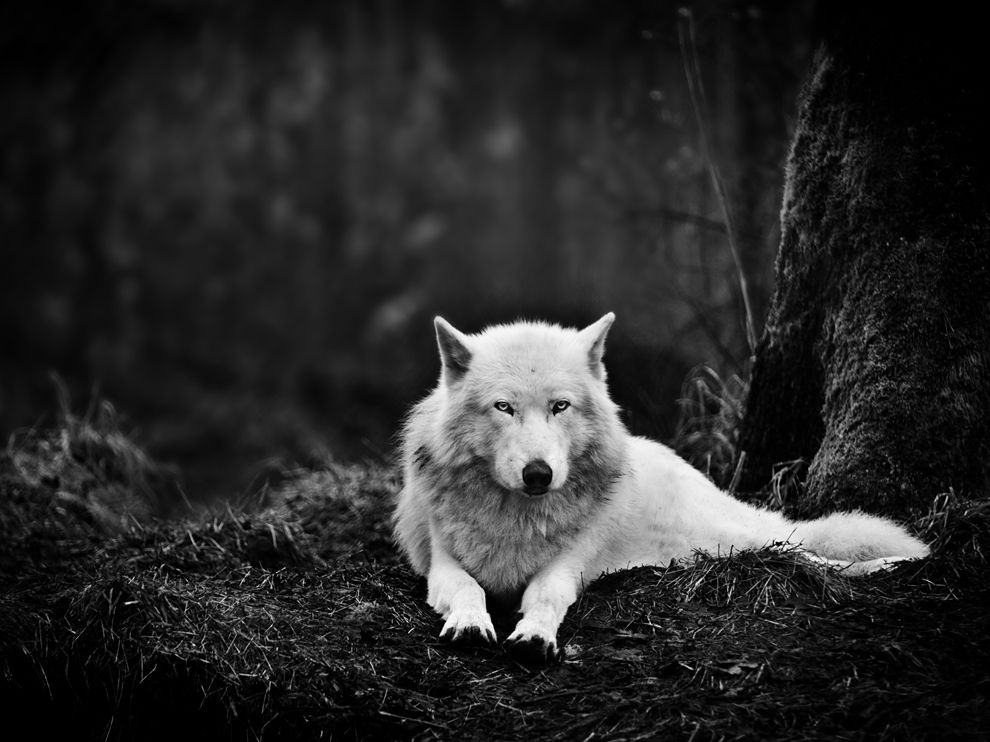
Did Dogs Come From Wolves?

wolf

Dogs were probably the first tame animals. They have accompanied humans for some 10,000 years. Some scientists assert that all dogs, domestic and wild, share a common ancestor in the small South Asian wolf.

Today humans have bred hundreds of different domestic dog breeds—some of which could never survive in the wild. Despite their many shapes and sizes all domestic dogs, from Newfoundlands to pugs, are members of the same species—Canis familiaris. Although they have domestic temperaments, these dogs are related to wolves, foxes, and jackals.

Domestic dogs still share many behaviors with their wild relatives. Both defend their territories and mark them by urinating on trees, rocks, fence posts, and other suitable sites. These scent posts serve notice to other dogs that an animal is occupying its territory.

Many pet dogs also bury bones or favorite toys for future use, just as their wild relatives sometimes bury a kill to secure the meat for later feasts.

Dogs communicate in several ways. Scent is one method, another is physical appearance. Body position, movement, and facial expression often convey a strong message. Many of these signals are recognizable even to humans, such as the excited tail-wagging of a happy dog or the bared teeth of an angry or threatened animal. Vocally, dogs communicate with a cacophony of sounds including barks, growls, and whines.

Domestic dogs serve as more than companions; many earn their keep by working hard. Dogs herd livestock, aid hunters, guard homes, and perform police and rescue work. Some special animals even guide the blind—a poignant symbol of the dog’s longstanding role as man’s best friend.

cropped-greenpetsamerica-org.jpg

email sign up


Adopting a Disabled Pet

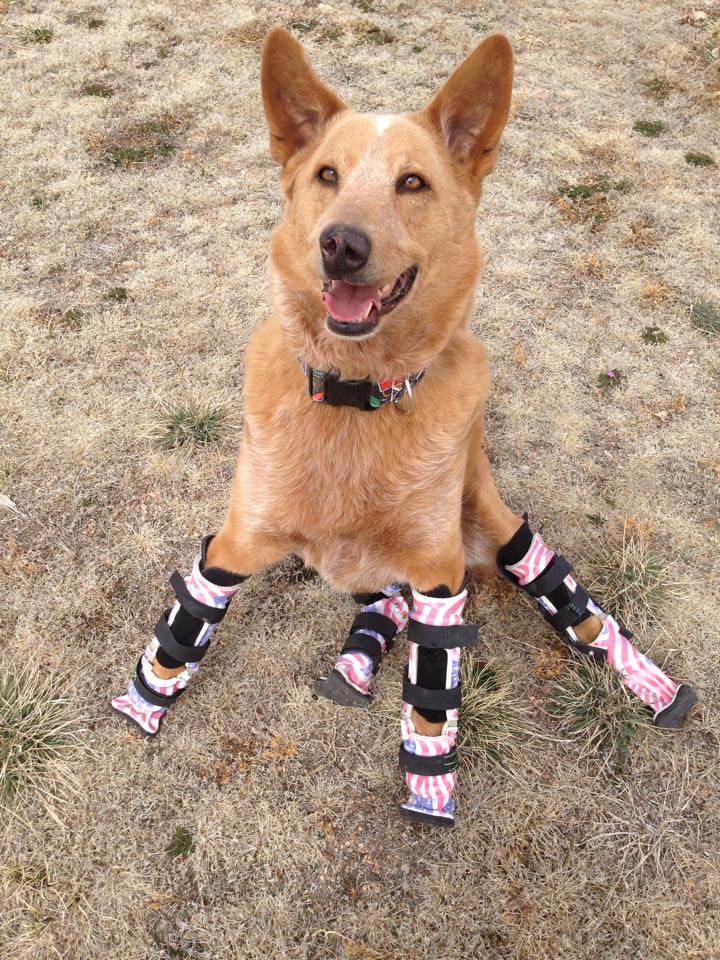
Nakio

Naki’o lost all four paws and the tip of his tail to frostbite when he was just a puppy. After being nursed back to health at an animal rescue center, he met veterinary assistant Christie Pace, who was looking to adopt an animal who needed help. When she saw Naki’o, she knew he was The One.  She adopted him at eight weeks old and immediately launched a fundraiser to get prosthetics for his back legs.  He did so well with the back leg prosthetics that Orthopets, the company that made them, also furnished him front leg prosthetics for free.  Now Naki’o enjoys life to the fullest and can walk, run, play and even swim!  Just look at that big smile! See more of Naki’o on his Facebook page.

This is a story that demonstrates very clearly that there is a loving home for all pets. No pet should ever be euthanized in an animal shelter because the pet has a disability. Rescue – Recycle – Relove.

cropped-greenpetsamerica-org.jpg

Daisy the Amazing Dog

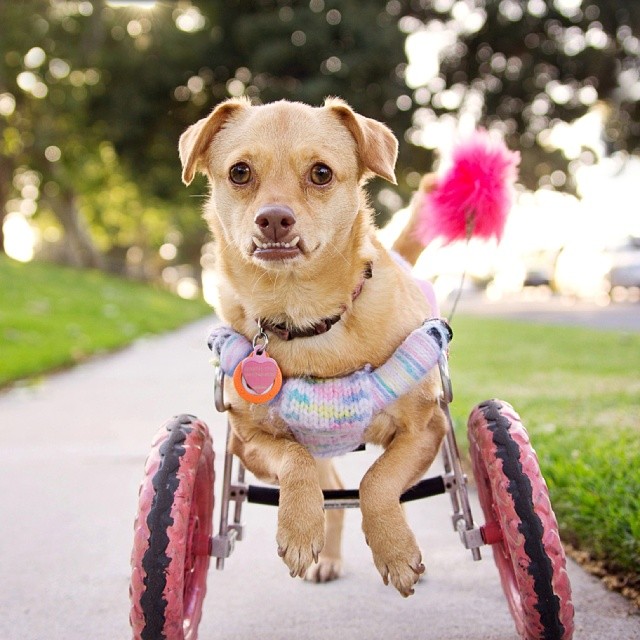
daisy the dog

Daisy was born with paralyzed front legs and twisted wrists and elbows. She was found abandoned on the streets of Bellflower and sat in the animal shelter for two months without an interested adopter. Scheduled for euthanasia, she was pulled by a volunteer with A Home 4Ever Rescue and placed in a home a few months later. Daisy’s owner describes her as happy, and credits her with teaching them that “pets with special needs are not very different from others.” You can follow Daisy on Instagram at #underbiteunite and on her Facebook page.

Ignorance Kills 4 Million Homeless Pets Yearly

GPACharities.us


We believe that all homeless pets can be saved.

We believe that we must stop killing 4 million homeless pets each year. In this day and age there is no reason that we cannot save them all. 

The only thing that is stopping us is ignorance… Ignorance kills. The antidote to ignorance is education. Education is our vision to create a no-kill America. The only thing that will stop us is good people standing by and not acting.

Please do not stand by any longer and turn a blind eye to the slaughter of the  innocents. Join with us. Help us bring light to darkness. 

Help us educate. Help us save lives. We are your friends, neighbors and community leaders who’ve come together to save lives.

 We are a gold star rated non-profit, recognized for humanitarian services to our communities.

Donate


Why Does The Humane Society Fight Laws That Save Dogs?

We now have a proven solution to shelter killing and it is not difficult, expensive nor beyond practical means to achieve. And the large national animal protection groups should be working feverishly to ensure that the model is replicated in every community in the country. But they are not.

 This article is from Nathan J. Winograd is the director of the national No Kill Advocacy Center and the author of three books on animal shelters. Learn more at nathanwinograd.com.
2013-09-26-WarholBag

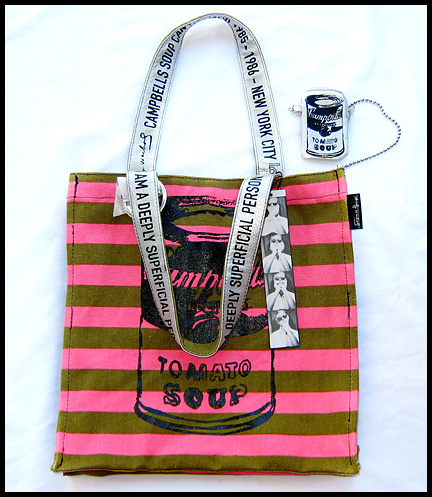
Several years ago, my wife was given a tote bag purchased at the Museum of Modern Art (MOMA) gift shop in New York City. The bag has an “Andy Warhol” theme, and, therefore, not surprisingly, it also has a sense of humor. It’s made of pink and green striped canvas with a large Campbell’s Tomato Soup can–arguably Warhol’s most iconic work–printed on its front and back. Running up the straps is the famous Warhol quote, “I am a deeply superficial person.” Inside, at the end of a long, silver chain is a soup can shaped coin purse. But the real gem–the pièce de résistance–is what was tucked discreetly inside an inner pocket of the bag: a photocopy of a 1956 letter written to Andy Warhol by the then Director of MOMA Collections, rejecting the donation of one of his drawings.

It’s a masterfully written letter, gracious in actual word choice, but dripping in sarcasm. You can infer just how audacious the Committee considered Warhol to be for daring to suggest that his art belonged in their venerable institution. Little did they know the joke was on them; as Warhol’s paintings have recently sold for as high as $100 million, and MOMA now boasts over 130 Warhol pieces in its collection.

“Last week our Committee… held its first meeting of the fall season and had a chance to study your drawing entitled Shoe which you so generously offered as a gift to our museum,” begins the letter. “I regret that I must report to you that the Committee decided, after careful consideration, that they ought not to accept it for our Collection.” It then goes on to explain that because storage space is limited, they had to decline a work that, in their words, would be “shown only infrequently.” The letter ends with the most ironic post script in the history of letter writing: “P.S. The drawing may be picked up from the Museum at your convenience.” At his convenience?! Where? At coat check?

Given the perspective afforded by hindsight, the letter is, of course, comical. And kudos to MOMA for being able to laugh at, indeed, fess up to, what in the end was a monumental blunder on their part. As art lovers, we can laugh along with the Museum and even appreciate their self-deprecating humor. We can forgive, forget, and move on, because in the world of art, when non-profits such as the Museum of Modern Art screw up, when they become insular, short-sighted, or fail to keep informed or open minded about the evolving field in which they are supposed to be the “experts,” no one dies as a result. Egos are bruised, money is lost, perhaps careers are stalled, but no one dies. And true genius lives on to vindicate itself–and even settle the score–at a later date.

The same, however, cannot be said about all non-profits. For some, the stakes in which they engage are so high, that their advocacy–when ill informed, antiquated and regressive–can have harmful, even deadly results. They, therefore, have a greater responsibility to stay informed and on top of the innovations within their field. They deserve to be–and must be–held to a higher standard. This is why the recent recommendation by the Humane Society of the United States telling animal shelters that whether they choose to implement lifesaving programs or not is entirely within their discretion, is such a betrayal not only of their mission, but, more importantly, the animals on whose behalf they claim to speak.

It is especially intolerable because it has been almost two decades since the cure for the “disease” of shelter killing has been discovered and successfully implemented. Animals enter shelters for a variety of reasons and with a variety of needs, but for over 100 years, the “solution” has been the same: adopt a few and kill the rest. The “No Kill Equation” model of sheltering provides a humane, life-affirming means of responding to every type of animal entering a shelter, and every type of need those animals might have. Some animals entering shelters are free-living cats who are not socialized to humans. At traditional shelters, they are killed, but at a No Kill shelter, they are neutered and released back to their habitats. Some animals entering shelters are motherless puppies and kittens. At traditional shelters, these animals are killed as well. At a No Kill shelter, they are sent into a foster home to provide around-the-clock care until they are eating on their own and old enough to be adopted. Some animals have medical or behavior issues. At a traditional shelter, they are killed. At a No Kill shelter, they are provided with rehabilitative care and then adopted. Whatever the situation, the No Kill Equation provides a lifesaving alternative that replaces killing. And when a shelter puts them all together, and implements them comprehensively, they achieve No Kill.

Through the No Kill Equation, every healthy and treatable animal entering a shelter can have a new beginning instead of the end of the line they face, if those shelters commit themselves wholeheartedly to building the infrastructure necessary to create and sustain a No Kill nation. We do that by institutionalizing the series of programs and services which replace killing and which have allowed for overnight success in the many shelters across the country that have already dedicated themselves to that end; programs like foster care, offsite adoptions, socialization and behavior rehabilitation, thorough cleaning and care standards, medical care both as prevention and for rehabilitation, working with rescue groups, neuter and release, pet retention, progressive field services/proactive redemption, marketing and adoptions, and of course, progressive and imaginative leadership.

Today, hundreds of cities and towns across America are serviced by shelters saving between 90% and 99% of all animals because they are doing so, while some shelters are killing as many as 99% of the animals because they are not. Can anyone with even a hint of compassion actually say it is better to kill baby kittens than bottle feed them? Kill animals rather than promote adoptions? Kill animals rather than work with rescue groups? Of course not, especially since implementing alternatives to killing is more cost-effective, and in many cases, cheaper than killing animals. Tragically, however, many shelter directors have decided that it is better to kill baby kittens, to kill animals despite rescue groups ready, willing and able to save them, and to kill animals rather than keeping them alive long enough to find homes. In fact, some shelters have no adoption hours, are not open to the public for adoptions, and refuse to do any adoptions, choosing to kill the animals instead.

We now have a proven solution to shelter killing and it is not difficult, expensive nor beyond practical means to achieve. And the large national animal protection groups should be working feverishly to ensure that the model is replicated in every community in the country. But they are not. Instead, after admitting that these programs are crucial to save lives, they tell shelters that not only do they “remain at the discretion of each community to choose whether and how to implement” but that they should not be criticized for refusing to do so, while millions of animals continue to lose their lives in shelters every year precisely because those shelters have chosen not to. Worse, they tell activists that they should not try to force shelters to implement those programs, even though doing so would save the lives of the animals they are currently killing. In other words, HSUS is telling shelters that these programs are necessary to save lives, but they do not have to do them and can choose to kill the animals instead.

Today, thanks to activists who succeeded in introducing and passing a law, it is illegal for a California shelter to kill animals when non-profit rescue groups are willing to save them. Before the California law went into effect, only 12,526 animals were being transferred from shelters to rescue groups statewide in a given year. The rest were being killed at largely public expense because many shelters were openly hostile to rescue groups. That number now stands at 58,939–a 370% increase in annual lifesaving, all at no cost to taxpayers. In fact, it saves taxpayers the cost of killing animals and discarding their remains. And since shelters are permitted to charge an adoption fee, it brings in badly needed revenues: potentially millions of dollars annually to shelter coffers across the state. Ironically, this is a law that HSUS opposed and lambasted, in effect telling legislators that over 40,000 additional animals every year were better off dead.

They continue to oppose similar legislation in other states, including Florida and New York, despite surveys showing that 63% and 71% of rescue groups respectively have reported being turned away from shelters in those states, which then turned around and killed the very animals the rescue groups offered to save. When activists sought a San Francisco ordinance to require local shelters to implement alternatives to the killing of dogs and cats for reasons that included being shy, scared, or too fat, HSUS sided with the shelter, explicitly stating that shelters should not be regulated as they are the “experts” who know best. When California sought to roll back protections for animals, HSUS agreed with the decision. And just this month, HSUS and other groups released a report telling California shelters that despite the fact that the programs of the No Kill Equation save lives, they need not implement them, and cautioning activists not to seek legislation that would force them to do so. In short, the decision as to whether or not animals should be saved remains, according to HSUS, a voluntary one.

Why? Having been given a free ride to continue killing in the face of readily-available, common sense and reasonable lifesaving alternatives for so long and to blame others (i.e., the “irresponsible public”) for the killing that they do, shelters do not want to be held accountable. Tragically, they have been allowed to get away with this intransigence because groups like HSUS which should be their fiercest critics for failing to do so, have instead chosen to provide them political cover, revealing a muddled understanding of what should be their mission: acting as lobbyists for the animals who are being killed in shelters instead of lobbyists for the shelters which are killing them.

We cannot achieve nor sustain a No Kill nation unless shelters implement the No Kill Equation, and that means mandating how shelters operate. For No Kill success to be achieved, widespread and long lasting, we must give shelter animals the rights and protections afforded by law. Every successful social movement results in legal protections that codify expected conduct and provide protection against future conduct that violates normative values. We need to regulate shelters in the same way we regulate hospitals and other agencies which hold the power over life and death.

It is time for the animal protection groups to move beyond the stymieing fiction that the entrenchment within the animal sheltering industry to innovation and improvement can be overcome through voluntary, rather than mandated means. Doing so is premised under the most tenacious lie that continues to allow for the killing of millions of animals every year: that all of those working in animal protection will willingly do what is necessary to stop killing, without being forced, by law, to do so if we just educate them on what to do. Not only are the programs of the No Kill Equation well-known and largely obvious, this approach has never worked, and the result has been the needless deaths of millions of companion animals every year. Nonetheless, HSUS and its acolytes pretend otherwise; clinging to their regressive, “deeply superficial” policies, to the animals’ continued peril.


 

Pray for the “dogs of Sochi”

whitedogprayer 400dpi
Pray for the “Dogs of Sochi”

Please say a Prayer for the homeless dogs of Sochi. May God protect them from being rounded up and killed at night

Now i lay me down to sleep

i pray the Lord my soul to keep

if i should die before i wake

i pray the Lord my soul to take

Amen

L A TIMES ARTICLE
By Carla HallFebruary 6, 2014, 3:07 p.m.

la-ol-sochi-olympics-kill-stray-dogs--20140206-001

We expect cities hosting the Olympic Games to take extreme measures to be presentable and safe for the world to descend on, but Sochi’s mass killing of stray dogs is appalling.

Many European cities have a problem with roaming cats or dogs: a stray, unsterilized population of animals left to fend for themselves. And I understand officials of the Russian city that sits on the Black Sea, just south of the Caucasus Mountains, worrying about stray dogs wandering onto snowboarding courses. But if Russian officials thought a mass killing of dogs was the best alternative, then they really don’t understand much about the legions of animal lovers and pet owners coming to Sochi or watching the Olympics on TV at home.

And it didn’t have to be this way. It’s pathetic that after all the time and money spent on preparations for the Olympics, officials of the city and the Games didn’t come up with a more humane and effective solution. If they had started sooner, officials could have spayed and neutered the dogs, moved them to shelters and launched a massive Olympic-themed adoption program. Animal welfare groups around the world would have volunteered in the effort. The Humane Society International and other animal welfare advocates have said for months that they would help Sochi with its stray dog problem.

Sochi’s plan to kill 2,000 dogs was announced last summer, prompting an international outcry. City officials backed off their plans but then hired a pest control company to kill the dogs starting last fall. Animal welfare advocates say hundreds have been killed.

Its treatment of these stray dogs as an afterthought — little more than vermin to be exterminated — is a window into Sochi’s, if not Russia’s, profound lack of compassion and humanity for companion animals.

Yes, some cultures don’t keep dogs as pets and even eat them as food, but far more see them as pets and treat them humanely. The U.S. has a fairly evolved ethic when it comes to the treatment of stray or unwanted pets. Practically every city or county has a municipal shelter or a contract with one to take in stray animals. And, increasingly, the goal of those shelters is to keep them all alive. In most privately run shelters, it’s the policy not to kill.

Sochi hasn’t gotten there yet. But private rescuers, aided by funds from a Russian oligarch, are scrambling to round up strays, before more are killed, and take them to a makeshift shelter — what the New York Times describes as “an outdoor shantytown of doghouses” on the outskirts of the city. Sochi could redeem itself in the eyes of the world if it announced that all plans to cull the dogs were forever canceled and instead extended an invitation to welfare groups to work with it to develop a shelter system.

http://www.latimes.com/opinion/opinion-la/la-ol-sochi-olympics-kill-stray-dogs-20140206,0,7872316.story#ixzz2smKtRgPN

Think Disney for Pets

Green Pets America Charities [GPAcharities.us] is an animal welfare organization whose mission is to celebrate the human & animal bond. Scheduled for 2015 we will build America’s first pet community center It will be an animal celebration community.Think Disney for pets. The Community on 20 acres will include.

  1. Events Stadium for indoor and outdoor events.
  2. Pet store selling pet food, pet clothes, pet treats etc.
  3. A store/center for dog training and people animal training.
  4. An adoption store with adoption areas for local shelters and rescue groups to bring their pets for adoption.
  5. Green adoption building for 50 rescue animals available for adoption.
  6. An eco green designed dog themed restaurant.
  7. A state of the art full service veterinary facility for public animal wellness exams.
  8. A pet shots only clinic.
  9. A spay & neuter facility for the public & rescue groups
  10. A full service pet grooming salon
  11. A self-service pet washing store
  12. Green dog park, multiple walking trails, and lots of open and wooded spaces for events, fairs and other outdoor animal focus activities.
  13. Community meeting facility for animal events and educational seminars.
  14. A Large animal themed people park with whimsical animal art.
  15. A pet boarding hotel.

The corner-stone to changing our animal care system in America will be the creation of these regional centers that animal lovers will go to adopt, celebrate with indoor & outdoor animal events, care for animals and shop and mingle with one another.

There are numerous places for people to come together to participate in activities they enjoy. For example our county has two aquatic centers for swimmers, a beautiful regional bike trail park for bikers, two YMCA centers, a senior center,two very small 1 acre dog fence parks. There are other facilities based on interest for the community as well. But although over 65 % of the public are animal owners there is really no large significant place for animal lovers to come together for activities and education. We will change that…think Disneyland for animal lovers and their family pets.Main Street shops 010411-L

  • Our first Pets America Community will be built on 20 acres of beautiful open green spaces with multiple green designed buildings and indoor/outdoor stadium in North Georgia, named Pets America Georgia. Picture a fun and beautiful one stop place for all things pets. The 30 acres would be a place for animal and human interaction and physical activities such as dog shows, dog agility events, pet merchandise store selling pet food, pet clothes, pet treats etc. A building for dog training, people animal training, animal welfare education. An adoption store with adoption areas for local shelters and rescue groups to bring their pets for adoption. A food concession stand. A veterinary facility for public animal wellness exams, annual shots and exams. A spay & neuter facility. A green dog park, walking trails and lots of open and wooded spaces for events, fairs and other outdoor animal focus activities. Picture a Disneyland for animals and animal lovers to come together and spend the day together as a community.

Green Pets America Charities was founded in 2006. Our mission is to celebrate the human and animal bond. We are an IRS Certified 501c3 nonprofit. We have been awarded the Gold Star seal for transparency and trust from Guide Star, America’s highest non-profit rating agency. Additionally Green Pets America received the humanitarian recognition from the State of Georgia Senate for serving Georgia’s families and animals.

UPDATE: 2-07-14. Committee meeting. Next step is finish business plan via additional research. Agreed that preliminary location demographics for population and income indicate Pets America of Georgia will be located north on Georgia 400 just outside Atlanta in Dawson County.

UPDATE: 2-13 -14: National Developer Identified

DONATE DOGgximage2 (1)linkedin