Please Don’t Abandon Your “Fur” Kids

JD GPA RESCUE

Can you imagine being foreclosed on; leaving your home, and not taking your kids with you? How callous would that be?

Yet every month people are leaving their homes, closing the door behind them and leaving their bewildered and frightened family pet behind and just drive away. We have rescued family dogs and cats left locked in basements, garages, back yards and houses with no food and no water. They are many times starving and near death when we finally hear about their plight from a  concerned neighbor, Realtor or shelter and rescue them.

There is no excuse for this evil behavior today. If you have to move please take your “fur” kids with you. You don’t leave your two-legged kids behind, please don’t abandon your 4 legged kids either. Cats and dogs are domesticated animals and just cannot survive locked up with no food, water and love.

If you cannot take them to an apartment then ask a neighbor, friend or relative to adopt them. Or call a local no kill rescue to get them. Or at least call your shelter. But please do not leave them behind to die a slow painful death. Sometimes they are listless skin and bones when we get them. Your pets loved you. They feel fear and pain just as you do. If  life has been unkind recently to you please do not take out your pain on your innocent animal.

Man up…do the right thing.

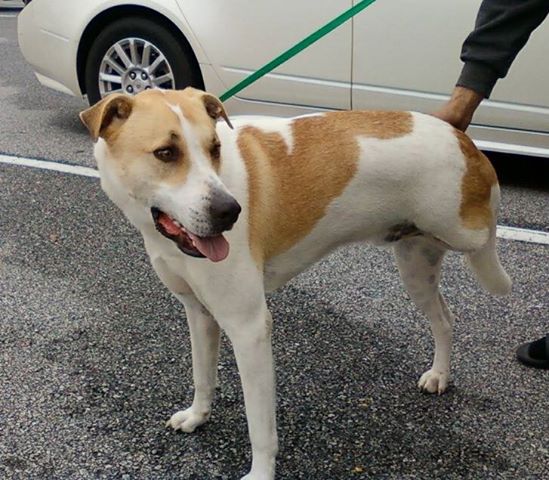
We presently have a happy little 3 legged dog named JD that was left behind to die. He was hit by a car and had his leg removed. Then his parents moved out and left him behind in the backyard to die. Despite all JD has been through this little guy is still happy and loving. Thank God a neighbor called to get him rescued. He is available for adoption now, or for a temporary foster home.

Please call right away or email Steve Monahan at the Cherokee County Animal League if you can help us get a well deserved loving home for JD. He is in Woodstock Georgia in our care.

Email Steve at CherokeeAnimalLeague@gmail.com, or call him at 770 712-4077.

Or visit our website to donate for JD’s care  

http://cherokeecountyanimalleague.wordpress.com/donate-page/
ccal WEB

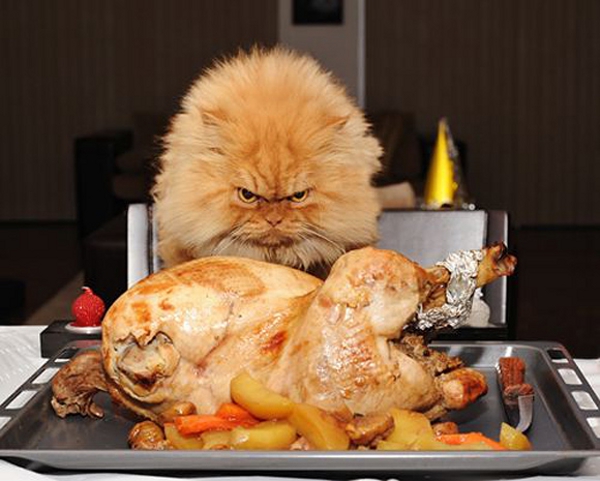
The Thanksgiving Cat

thanksgiving-cat-is-not-happy

Thanksgiving, for most of us, is a day for family and friends; a pleasant day with lots of great food and often a houseful of guests. However, for your cat, Thanksgiving can be a living nightmare.

With lots of people coming and going, the doorbell ringing constantly, and major changes in the household routine, Thanksgiving can be an extremely stressful time for your cat. Unfortunately, stress and cats do not generally go well together. Stressful situations can make your cat anxious and frightened. They can also cause your cat to become ill. There are many stress-related feline diseases, with interstitial cystitis (urinary tract disease) being among the most common and most well-known of these diseases. Other diseases that can be caused by stress include intestinal diseases, such as inflammatory bowel disease (IBD), and even respiratory diseases like asthma can be antagonized by stress. While it may not be practical to keep to your regular household routine on Thanksgiving, there are steps you can take to make your cat more comfortable and reduce the stress level for him.

  • Make sure your cat has a quiet, safe, private area that he can retreat to if he feels the need. This area should be restricted from your house guests so that your cat can rest undisturbed. An unused bedroom or bathroom will work for this purpose.
  • Provide your cat with a litter box and with a food and water station in his safe place. A bed or a soft towel or blanket which keeps your cat comfortable while resting should be provided as well. If your cat is acclimated to his carrier and feels safe there, consider placing his carrier in the safe room with him. Leave the carrier open so that your cat can enter and exit at will.
  • Play a radio, television or CD in your cat’s safe room to provide background noise and mask the sounds of the festivities in other areas of the house. Classical music is a good choice.
  • Feliway is a synthetic pheromone that can be used to reduce your cat’s stress level. It is available as a diffuser or as a spray. Either form is effective and can be used to help calm your cat during stressful periods such as Thanksgiving.
  • There are also other natural remedies, such as Rescue Remedy for Cats, which can be helpful in providing a calming effect for your cat. Never use any remedy for your cat that does not specifically say that is safe for cats on the label. Some medications, natural or pharmaceutical, are safe for dogs but not for cats.
  • If your cat becomes especially anxious or fearful, sedatives such as alprazolam (Xanax) can also be considered, particularly if the natural remedies prove to be ineffective or only partly effective. Talk to your vet about whether this would be appropriate for your cat.

Your cat will thank you for giving him the opportunity to escape from people and activity with which he feels uncomfortable. Of course, there are some cats that enjoy the added attention and the tempting smells that come with Thanksgiving and Thanksgiving dinner. If your cat is in this category, let him enjoy the festivities. Having his own private room or even an open carrier he can sneak away to will still give your cat the opportunity to take a break from the action if he finds it necessary.

 Article Courtesy Dr. Lorie Huston

cropped-ccal-med1.jpeg


Should You Give a Pet For Christmas?

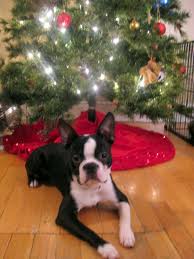
dog christmas tree

Generally those of us in the animal rescue business discourage giving pets as a gift at Christmas. But research show we may have been wrong. We believed it is based on the fact of seeing pets dumped us, or the shelter just 30 or 60 days after Christmas, when the reality of taking care of a puppy or kitten overwhelms some people.

Some rescue groups and shelters also have a long-held belief  that animals not specifically chosen by their new owners may be considered less valuable.

This belief, however, is actually counter to new research by the ASPCA and other experts in the animal-welfare field.

_________________________________________

Research

In 2013, the ASPCA surveyed people who had received their pets as gifts in order to learn more about their attachment to – and the retention of – that pet. They also explored the difference in those factors for those that obtained their gifted pet as a surprise. Research found there is no correlation between getting an animal as a gift and an owner’s love and attachment to the pet even if that pet was a surprise gift and no increased risk of relinquishment for dogs and cats received as gifts.​

An earlier study, identified the source of approximately 2,600 dogs and 2,300 cats relinquished to 12 shelters in four regions of the U.S. They found that dogs relinquished to shelters had most frequently come from friends, shelters and breeders. Relinquished dogs infrequently came from pet shops, as gifts and from veterinarians. That study found that the odds of dog relinquishment were higher when acquiring an animal from a shelter, friend, as a stray, and from a pet shop compared to receiving an animal as a gift (and controlling for other factors such as gender, neuter status, length of ownership and purchase cost).

In addition, Scarlett et al identified 71 reasons given for pet relinquishment. “Unwanted gift” was listed as a reason for only 0.3% of dogs and 0.4% of cats entering the shelters surveyed, compared with “No time for pet” as a reason 10% of dogs were relinquished and “allergies in family” as a reason 18% of cats were relinquished.

And finally Patronek et al examined risk factors for dog relinquishment at one shelter and concluded that dogs that were received as a gift were at significantly decreased risk of being relinquished, compared to dogs who were purchased or adopted.

Bottom Line 

These are exciting findings that may help open new adoption options for rescue groups and animal shelters, allowing more animals to be placed in loving homes. The ASPCA recommends however that the giving of pets as gifts be only to people who have expressed a sustained interest in owning one, and who have the ability to care for it responsibly.

ccal