
Green Pets America Vision

We are an animal rescue, advocacy and education organization. Our mission is to advance the animal care system in America by the creation of regional no-kill rescue and adoption villages. They will be regional sanctuaries and include villages & shops where animal lovers will go to adopt, celebrate, care for animals, purchase services and products, and mingle with one another and bring their pets with them.Think Disney for pets
pets america proposed shopping center

Each sanctuary & village will include:

  1. Agility Park & Arena for regional animal events
  2. Pet store selling pet food, pet clothes, pet treats etc.
  3. A building for dog training and people animal training.
  4. An adoption store with adoption areas for local shelters and rescue groups to bring their pets for adoption.
  5. Green building for 25 rescue animals.
  6. Dog friendly restaurant
  7. Veterinary facility for public animal wellness exams and annual shots.
  8. Spay & neuter facility for the public & rescue groups
  9. Green dog park, multiple walking trails, and lots of open and wooded spaces for events, fairs and other outdoor animal focus activities.
  10. Community meeting facility for animal events and educational seminars.

_________________________________

We believe the corner-stone to changing our animal care system in America will be the creation of these regional sanctuaries, where animal lovers can go to adopt, celebrate with indoor & outdoor animal events, care for animals and shop and mingle with one another.

There are numerous places for people to come together to participate in activities they enjoy. For example our county has two aquatic centers for swimmers, a beautiful regional bike trail park for bikers, two YMCA centers, a senior center,two very small 1 acre dog fence parks. There are other facilities based on interest for the community as well. But although over 65 % of the public are animal owners there is really no large significant place for animal lovers to come together for activities and education. We will change that…think Disneyland for animal lovers and their family pets.

  • Our Village –  will be built on 30 acres of beautiful open green spaces with multiple green designed buildings in North Georgia. Picture a fun and beautiful one stop place for all things pets. The 30 acres would be a place for animal and human interaction and physical activities such as dog shows, dog agility events, pet merchandise store selling pet food, pet clothes, pet treats etc. A building for dog training, people animal training, animal welfare education. An adoption store with adoption areas for local shelters and rescue groups to bring their pets for adoption. A food concession stand. A veterinary facility for public animal wellness exams, annual shots and exams. A spay & neuter facility. A green dog park, walking trails and lots of open and wooded spaces for events, fairs and other outdoor animal focus activities. Picture a Disneyland for animals and animal lovers to come together and spend the day together as a community.

Green Pets America was founded in 2006. Our mission is rescue, advocacy and reform. We work daily to end neglect, abuse, cruelty and exploitation of animals, ensuring that their interests and well-being are humanely protected as we work to end the 125 year old failed practice of euthanizing 4 million pets annually in America.

Green Pets America is a IRS Certified 501c3 nonprofit. We have been awarded the Gold Star seal for transparency and trust from Guide Star, America’s highest non-profit rating agency. Additionally Green Pets America received the humanitarian recognition from the State of Georgia Senate for serving Georgia’s families and animals.

Every year Americans discard 8 million dogs and cats. Our shelters adopt out 4 million and destroy the remaining 4 million. This tragedy must end. We can save over 4 million pets annually by creating adoption sanctuaries for celebrating, caring for and recycling not euthanizing Americas shelter pets.

Help us advance the animal welfare system in America.

DONATE DOGgximage2 (1)

food for thought…pardon the pun

Steven Monahan's avatarGreen Living 365


enhanced-buzz-wide-5423-1327438901-11


Food for thought…pardon the pun. We kill 4 million homeless abandoned dogs and cats in our animal shelters each year.

We eat more meat than we need to. It is bad for our health and contributes to heart disease and cancer because of the hormones artificially fed to fatten the animals.

We are disgusted that the Chinese eat dogs…yet we eat pigs and goats and cattle.

GPA 400dpi


View original post

The Benefits of Animals in a classroom

We believe that the hope of a better future for our animals and indeed our whole world lies in the hearts and minds of today’s children.

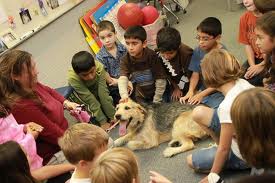
Education as well as rescue is part of our Green Pets America communities strategy to end killing over 4 million animals yearly in America’s animal shelters. We have various education programs including taking Green Pets America rescued dogs into  middle schools, high schools and college classrooms. We talk about animal care, homeless animals and how they can help make life better for animals in their community. It is much more that however. We want to have them learn how to work cooperatively, to learn empathy for animals and one another, and learn to be leaders.

Kids just love seeing and petting our rescue dogs and love to tell us about their own pet.

Green Pets America Communities at Cherokee Charter School

We live today in a new world. An exponentially accelerating changing world. Since the 1800’s that rate of change has accelerated every decade and has now reached exponential rapid change.The old social paradigm was “repetition reinforces repetition” – Think assembly line production, manufacturing and even education of our children.The paradigm shifted dramatically in the late 1980’s s and the world is now suffering through this dramatic change. The new paradigm is the polar opposite of the old repetition, repetition. Change not repetition is the new normal Today change begets new change…rapidly accelerating change.  In just 10 years from now children and adults who cannot adjust and contribute to a constantly changing world and society will be marginalized and stuck in dead-end jobs.We are experiencing that already.  We must immediately change the Pedagogy of how we educate our children, and the social skills they will need to thrive in this exponentially changing world. We believe we can help our children learn new skills and social interaction skills by tying it into fun animal education as well as social skills education.

dogs classroom

Despite the rapid change issues we must deal with in the short-term, the long-term outlook is positive. The future will be a world in which every single person learns how to become a contributor and collaborator and learn the skills; social and functional, to drive change in an exponentially changing world where solutions and opportunities must outpace problems.

boydogbook

Green Pets School Program Mission

Teach and develop children through animals. Focus on the social skills they will need to thrive in the new exponentially changing world.

  • Compassion for Animals
  • Responsible pet ownership
  • Ethical Leadership
  • Social Entrepreneurship
  • Creativity in career, problem solving and social challenges
  • Ethics in life and business
  • Teamwork
  • Empathy for others
  • dogbook

Our Children are our  hope for a better tomorrow. We are a  proud “Partner in Education” participant with the Cherokee County Chamber of Commerce.

Animals in a classroom have shown to dramatically get kids involved in learning. But don’t take my word for it, take look at the results from the 2002 study, “Behavioral effects of the presence of a dog in a classroom.”

  1. With an animal in the classroom children were less engaged in loud, conspicuous, or troublesome behavior.
  1. They paid more attention to their teacher, cooperated better, and communicated more intensely with one another.
  1. Improvements in social behavior were more pronounced in boys than in girls, perhaps because girls showed less boisterous, “rough-and-tumble” activity to begin with.
  1. The teacher’s authority increased, particularly with respect to certain male students, in the presence of her compliant, obedient dog.
  1. The teacher continued to bring her dogs to school the following year. She reported that the effects observed in the study were lasting and long-term.

Help Green Pets America Communities create a better world for our children and animals.

fb icon

← Back

Thank you for your response. ✨

Do you love dogs & cats ?

dogpawf

Do you love animals?

Do you want to be part of the rapidly growing grass movement to create no kill green communities across America?

Do you have an existing rescue organization… or want to start one?

If you cannot rescue would you love to advocate for the no kill movement in your area?

Would you like to help rescue and adopt more discarded homeless animals in your community.

Would you like to become part of a National no kill organization that has been 100% no kill since 2006?

If so then we should talk.

Benefits to starting a Green Pets Community in your area:.

  • You will be part of Americas only 100% no kill green rescue & recycle animal welfare organization
  • We are a IRS 501 c3 certified non-profit since 2006
  • We are Gold Star rated by the national non-profit rating organization Guide Star
  • We are accredited and with JustGive.org the Bill gates non-profit assistance organization
  • We have been recognized by the State Senate of Georgia for service to Georgia’s animals & families
  • We have been recognized by the City of Woodstock for service to animals and families
  • We are a 100% volunteer organization – no one including the founder and Executive Directors takes a salary
  • You will help grow the only National Organization spearheading 100% no kill across America
  • You will receive training and support to implement no kill Rescue and no kill Foster Home Care in your community
  • We have an in-school kid’s animal education program that you can participate with in your community
  • You will have your own page on our National Website and Face book sites
  • You may be able to receive tax-deductible donations that go to your Community
  • You will receive support and assistance on fundraising and holding community events
  • You will help end an era of killing homeless animals in America
  • You will save lives and change the world for the better

To join the rapidly growing grass-roots no kill green movement and discuss opening a Green Pets America Community email Steve Monahan, Founder Executive Director

← Back

Thank you for your response. ✨

facebook

View upcoming release of a feature-length documentary on the No Kill revolution in America

bergh1The No Kill Advocacy Center, in partnership with No Kill Nation and Sagacity Productions, is proud to announce the upcoming release of a feature-length documentary on the No Kill revolution in America.

CLICK TO VIEW MOVIE TRAILER:The No Kill Revolution in America

When the early founders of the animal protection movement died and their organizations took over the job of killing those they had been formed to protect, a fiery zeal was replaced with a smoldering ember that gave little light or warmth and the humane movement went to sleep. After over 100 years of this antiquated and deadly paradigm, the grassroots of the animal protection movement is finally waking up.

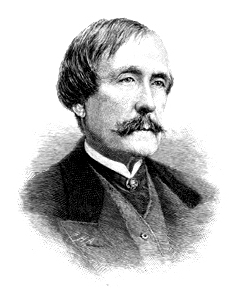
Starting with the founding of the first SPCA in North America by Henry Bergh and continuing to this very day, the documentary will tell the story of heroes and villains, betrayal and redemption. But most of all, it is the story of a social movement that is as noble and just as those which have come before.

cropped-gpacommunities-400dpi1.jpeg

The American No Kill Animal Resolution

2dogs

The American No Kill Resolution

nokilladvocacycenter.org

I. Preamble

One hundred and fifty years ago, societies for the prevention of cruelty to animals and other humane organizations were founded to establish standards for humane treatment of animals, to promote their rights, and to protect them from harm. This marked the formal beginning of the humane movement in the United States.

The scope and influence of these early humane organizations were testament to the public’s concern for animals. It did not take long for them to set their sights on the abuse of homeless animals and cruel methods of killing by public pounds. It was common practice at the time for city and town dog-catcher to beat, drown, or shoot homeless animals.

Many humane agencies responded by entering into animal control contracts with towns and cities to ensure that the killing was done more humanely. But in taking on municipal animal control duties, these agencies abandoned their lifesaving and life-enhancing platforms when those beliefs conflicted with their contractual responsibilities. In the current era, where laws require killing by even more “humane” methods, these contradictions have become starker.

Increasingly, the practices of both humane societies and municipal animal control agencies are out of step with public sentiment. Today, most Americans hold the humane treatment of animals as a personal value, which is reflected in our laws, cultural practices, the proliferation of organizations founded for animal protection, increased per capita spending on animal care, and great advancements in veterinary medicine. But the agencies that the public expects to protect animals are instead killing some four million animals annually.

Lifesaving alternatives to the mass killing of animals in shelters have existed for decades. These lifesaving methods are based on innovative, humane, nonlethal programs and services that have proven that the killing can be brought to an end. Too many of these agencies, however, remain mired in the kill philosophies of the past, unwilling to or hampered from exploring and adopting methods that save lives. This is a breach of their public trust, a gross deviation from their responsibility to protect animals, and a point of view that we, as caring people and a humane community, can no longer accept or tolerate.

We assert that a No Kill nation is within our reach—that the killing can and must be brought to an end. It is up to each of us working individually and together to implement sheltering models that have already saved tens of thousands of animals in progressive communities. If we work together—with certainty of purpose, assured of our own success, with the commitment that “what must be done, will be done”—the attainment of our goals will not be far off.


II. No Kill Resolution

Whereas, the right to live is every animal’s most basic and fundamental right;

Whereas, societies for the prevention of cruelty to animals and other humane organizations were founded to establish standards for humane treatment of animals, to promote their rights, and to protect them from harm;

Whereas, traditional sheltering practices allow the mass killing of sheltered animals;

Whereas, every year shelters in the United States are killing millions of animals who could be saved, and are also killing millions of free-living animals who do not belong in shelters;

Whereas, life always takes precedence over expediency;

Whereas, the No Kill movement in the United States has successfully implemented new and innovative programs that provide alternatives to mass killing;

Whereas, lifesaving change will come about only if No Kill programs are embraced and further developed;

Whereas, failure to implement No Kill programs constitutes a breach of the public’s trust in the sheltering community;

Now, therefore, be it resolved that No Kill policies and procedures are the only legitimate foundation for animal sheltering; and,

It is incumbent upon all shelters and animal groups to embrace the philosophy of No Kill, to immediately begin implementing programs and services that will end the mass killing of sheltered animals, and to reject the failed kill-oriented practices of the past.


III. Statement of Rights

We acknowledge the following:

  • Sheltered animals have a right to live;
  • Free-living animals have a right to their lives and their habitats;
  • Animals, rescuers, and the public have a right to expect animal protection organizations and animal shelters to do everything in their power to promote, protect, and advocate for the lives of animals;
  • Animal protection groups, rescue groups, and No Kill shelters have a right to take into their custody animals who would otherwise be killed by animal shelters;
  • Taxpayers and community members have a right to have their government spend tax monies on programs and services whose purpose is to save and enhance the lives of all animals;
  • Taxpayers and community members have a right to full and complete disclosure about how animal shelters operate.


IV. Guiding Principles

No Kill is achieved only by guaranteeing the following:

  • Life to all healthy animals, and to all sick, injured or traumatized animals where medical or behavioral intervention would alter a poor or grave prognosis;

·     The right of sanctuary for aggressive dogs where behavior intervention cannot alter a poor or grave prognosis;

  • The right of free-living animals to live in their habitats;

These conditions can be achieved only through adherence to the following:

  • Shelters and humane groups end the killing of savable animals;
  • Every animal in a shelter receives individual consideration, regardless of how many animals a shelter takes in, or whether such animals are healthy, underaged, elderly, sick, injured, traumatized, or not social with humans;
  • Shelters and humane organizations discontinue the use of language that misleads the public and glosses over the nature of their actions, such as “euthanasia,” “unadoptable,” “fractious,” “putting them to sleep,” and other euphemisms that downplay the gravity of ending life and make the task of killing easier;
  • Shelters are open to the public during hours that permit working people to reclaim or adopt animals during non working hours;
  •        Public shelters work with humane animal adoption organizations to the fullest extent to promote the adoption of animals and to reduce the rate of killing;
  • Shelters provide care and treatment for all animals in shelters to the extent necessary, including prompt veterinary care, adequate nutrition, shelter, exercise, and socialization;
  • Shelters are held accountable for and make information publicly available about all the animals in their care.


V. No Kill Standards

The implementation of these lifesaving procedures, policies, and programs must be the immediate goal of every shelter, and animal control and animal welfare agency:

  • Formal, active commitment by shelter directors, management, and staff to lifesaving programs and policies, and dedication to promptly ending mass killing of shelter animals;
  • Immediate implementation of the following programs by all publicly funded or subsidized animal shelters:
  • An end to the policy of accepting trapped free-living animals to be destroyed as unadoptable, and implementation of re-release programs;
  • Abolishment of trapping, lending traps to the public to capture animals, and support of trapping by shelters, governments, and pest control companies for the purposes of removing animals to be killed;
  • An end to “owner”-requested killing of animals unless the shelter has made an independent determination that the animal is irremediably suffering;
  • The repeal of unenforceable and counter-productive animal control ordinances such as cat licensing and leash laws, pet limit laws, bans on feeding stray animals, and bans on specific breeds.
  • A foster care network for underaged, traumatized, sick, injured, or other animals needing refuge before any sheltered animal is killed, unless the prognosis for rehabilitation of that individual animal is poor or grave;
  • Comprehensive adoption programs that operate during weekend and evening hours and include offsite adoption venues;
  • Medical and behavioral rehabilitation programs;
  • Pet retention programs to solve medical, environmental, or behavioral problems and keep animals with their caring and responsible caregivers;
  • Programs to release free-living animals back to their habitats;
  • Rescue group right of access to shelter animals;
  • Volunteer programs to socialize animals, promote adoptions, and help in the operations of the shelter;
  • Documentation that all efforts to save an animal have been considered, including medical and behavioral rehabilitation, foster care, rescue groups, re-release, and adoption.

 Green Pets America Communities.org 100% no kill since 2005

cropped-gpa-rescue-recycle-400dpi.jpeg

← Back

Thank you for your response. ✨


3 WAYS YOU CAN HELP END ANIMAL CRUELTY

dogstich

You have the power to end animal cruelty and spread the no kill movement across America. Help Green Pets America Communities create: Green grass-roots no kill national animal welfare communities across America.

The Humane Society and the SPCA are not 100% no kill. Green Pets America has been rescuing pets since 2006. We have always been 100% no kill. We talk to individuals daily…they call us and want to be sure they are turning in their beloved pet to a no kill group, not a kill shelter. While we are no kill, we cannot take them all in at our one facility. We are always saddened to turn people away and that is why we have started to create no kill green grass-roots communities across America that are 100% no kill:  so no family has to ever turn their pet to a shelter to be killed.

It is our fervent belief that a No Kill nation is now possible in America in this decade. It can only reach full success however by creating grass-roots communities of animal lovers, rescue groups and elected officials who are working together, not individually to implement the no kill sheltering model that has already saved tens of thousands of animals across America. We must create Communities across America that control the lives of animals where people live. The day that one shelter manager controls the lives of all the homeless animals in their community is over. That control over life and death cannot be left to our government shelters. That control over life and death of innocent animals must reside with the entire community. That is why we are creating grass-roots Green Pets America Communities, not just single shelters.

Become part of the “Green grass-roots no kill communities movement” to create no kill green communities across America. Help us create an alternative to killing 4 million family pets yearly in America.

Here are 3 things you can do today to save animals.  

1. DONATE: No amount is too small and please invite others to do the same, and the chain of micro donation will continue and grow.

2. SHARE:  Our website {www.GreenPetsAmericaCommunities.org} on your Twitter, Facebook,  LinkedIn, or any other social network to which you belong.

3.Become part of the rapidly growing ‘Green Grass Roots No Kill Communities movement” and Start your own Green Pets America Community in your city to rescue and educate the public on the no kill movement spreading across America. Visit our page on how to start your own local no kill community. We have Humane Societies in most major cities –  help us open alternative no kill Green Pets America Communities as well.

“If you have men who will exclude any of God’s creatures from the shelter of compassion and pity, you will have men who will deal likewise with their fellow-men.”  – Saint Francis of Assisi

facebook

← Back

Thank you for your response. ✨

Green Pets America – Kids School Education

boydogbook

We believe that the hope of a better future for our animals and indeed our whole world lies in the hearts and minds of today’s children.

Through our Green Pets America – Communities program we take our rescued dogs into our local middle school, high school and college classrooms and talk about animal care, homeless animals and how they can help make life better for animals in their community. It is much more that however. We want to have them learn how to work cooperatively, to learn empathy for animals and one another, and learn to be leaders. They love seeing and petting our rescue dogs and love to tell us about their own pet.

_______________________________________________

Our Vision

We live today in a new world. A exponentially accelerating changing world. Since the 1800’s that rate of change has accelerated every decade and has now reached exponential rapid change.The old social paradigm was “repetition reinforces repetition” – Think assembly line production, manufacturing and even education of our children.The paradigm shifted dramatically in the late 1980’s s and the world is now suffering through this dramatic change. The new paradigm is the polar opposite of the old repetition, repetition. It is no longer building a better mousetrap, but having us and the mouse learn to live together…now change begets new change…rapidly accelerating change.  In just 10 years from now people who cannot adjust and contribute to a constantly changing world and society will be marginalized and stuck in dead-end jobs.We are experiencing that already.  We must immediately change the Pedagogy of how we educate our children, and the social skills they will need to thrive in this exponentially changing world. We believe we can help our children learn new skills and social interaction skills by tying it into fun animal education as well as social skills education.

Despite the rapid change issues we must deal with in the short-term, the long-term outlook is positive. The future will be a world in which every single person learns how to become a contributor and collaborator and learn the skills; social and functional, to drive change in an exponentially changing world where solutions and opportunities must outpace problems.

Kids 4 Pets at Cherokee Charter School
Green Pets at Cherokee Charter School

Our Mission

Teach and develop children through animals.

  • Compassion for animals
  • Responsible pet ownership
  • Ethical Leadership
  • Teamwork
  • dogbook

At Green Pets America Charities “Green Pets School Program” we believe we must reach our future leaders while they are learning about life and  while their minds and hearts are still hungry and open for knowledge. We believe we can reach them in a fun way via interacting with and learning from animals.  Our Children are our  hope for a better tomorrow. We are a  proud “Partner in Education” participant with the Cherokee County Chamber of Commerce.

But don’t take my word for it, take a look at the results from the 2002 study, “Behavioral effects of the presence of a dog in a classroom.”

  1. Children were less engaged in loud, conspicuous, or troublesome behavior.
  1. They paid more attention to their teacher, cooperated better, and communicated more intensely with one another.
  1. Improvements in social behavior were more pronounced in boys than in girls, perhaps because girls showed less boisterous, “rough-and-tumble” activity to begin with.
  1. The teacher’s authority increased, particularly with respect to certain male students, in the presence of her compliant, obedient dog.
  1. The teacher continued to bring her dogs to school the following year. She reported that the effects observed in the study were lasting and long-term.

Join with us and  donate today so we can create a safer and better world for our children and animals to thrive  in tomorrow ?

DONATE DOG

Can Your Dog Think?

 i luv 400dpi

What’s in a dog’s mind?  That has been the age-old question that man has had about the lovable canine species. Dogs and humans have had a long-standing history together that dates as far back as 30,000 B.C. While there are many differences between the two species, there are also some surprising similarities that are worth exploring.

It is estimated by historians that in 30,000 B.C., Paleolithic humans hunted alongside wild dogs. Dogs were buried with humans as far back as 12,000 B.C., which depicts the love between man and canine and that dogs were valued just as greatly as people. Different dog breeds were domesticated and easily distinguished by 10,500 B.C., and then, by 1,500 C.E., the oldest modern dog breeds were formed. These include the mastiff, terriers, herding dogs, sight hounds, chows, Asian Spaniels, the Spitz and Native American dog breeds.

Dogs can also experience a disorder known as separation anxiety, which makes them feel overly anxious when they are not with their owner or the one person they love the best. This disorder can be quite serious and the dog can act out in a variety of ways that will cause grief to the owner.

Dogs, like humans, can experience phobias. The most common include thunder, being left alone, vets, strangers, stairs and even riding in cars. A phobia of course is an irrational fear of something. Dogs can experience dreams around 20 minutes after they fall asleep. You can tell when your pet is dreaming as it moves while asleep or makes soft noises.

Like humans, dogs have the capacity to feel love. This is due to the hormone oxytocin, which is found in both species. Dogs can also feel an array of additional emotions, such as anger, joy, fear, excitement, distress, contentment and disgust. However, unlike the human race, dogs cannot feel shame, guilt, pride or contempt.

Having 4 dogs myself and rescued hundred through our rescue group Green Pets America I can assure you dogs are quite smart. They have a better handle on their emotions than we do. They don’t carry grudges, don’t judge, and accept us crazy humans just as we are. A dog will not try to change you…he accepts you for just who you are and loves you as is.

large_pet_bowl

Dog Clothes: Protection for Your Dog this Winter

dog_hoodie

Dogs are just like humans in that they do not like wet and cold weather and can suffer in winter time if they do not have the correct protection against the cold weather.  Dog clothes are a wardrobe essential for your four legged friend that keeps them warm and most importantly happy no matter the weather.

Dog clothes are well designed garments that are designed with your dog in mind so that your dog can function in his everyday life whilst staying cozy and comfortable.  Dog clothes are ideal for dogs that fall into the categories listed below;

  • Older/senior dogs
  • Injured or recovering dogs
  • Small dogs as they are closer to the ground and easily get wet
  • Dogs with thin or thinning coats
  • Working dogs
  • Dogs living or working in extreme climates
  • Puppies

  A coat for your dog can provide extra protection and insulation whilst they explore the outdoors and most dogs love the fuss of getting dressed in the winter time.   If your dog has been injured or has suffered from an illness they would benefit from an extra layer of dog clothes when they are out and about as they can reach full health again faster. 

 If your dog is hesitant about going outside they may be feeling the cold so it is important to notice the signs and dress them appropriately. You should always ensure that the clothing item works with the shape of your dog’s body and does not prevent him/her from doing anything they would normally do! 

Visit our Logo Store for the dog hoodie shown