30 Things You Can Do To Save 4 million Companion Animals

dogstich

Every day, more than 11,000 animals are killed in America’s shelters simply

because they don’t have a safe place to call home. But this doesn’t have to

happen.

Here are 30 things you can do to get more animals adopted.

1. Adopt your next pet rather than buying one online or from a pet store

supplied by puppy mills.

2. Spay or neuter your pets.

3. Volunteer at your local shelter or rescue group.

4. Donate to your local rescue group..

5. Tell others about the lifesaving impact of adoption and spay/neuter.

6. Hold a garage sale and give the profits to your local shelter.

7. Share Facebook posts about adoptable animals.

8. Write a letter to the editor of your local paper focused on making your

community no-kill.

9. Tweet about adoption events and spay/neuter promotions with the

hashtag #SaveThemAll.

10. Advocate for lifesaving legislation in your community and nationwide by

joining Voices for No More Homeless Pets at bestfriends.org/yourvoice.

11. Share success stories about rescued animals and rescue groups in your community

12. Participate in a trap/neuter/return program for community cats.

13. Manage a community cat colony.

14. Donate food, toys and other supplies to your local animal shelter or

rescue group.

15. Volunteer to play with and socialize the animals at your local shelter.

16. Walk a dog from your local shelter, with the pet wearing an “Adopt Me”

bandana.

17. Shop at your local shelter’s thrift shop or gift store.

18. Help your local shelter redesign its website or develop new promotions.

19. Get local business owners and clubs to take on a project to help a local

shelter.

20. Collect cans and bottles for a rebate and donate the proceeds to your

local shelter or rescue group.

21. Offer rides to pets going from an animal shelter or rescue group to their

new, happy homes.

22. Foster an adoptable pet.

23. Photograph adoptable pets for your local shelter or rescue group to

promote via social media.

24. Participate in annual local rescue fundraisers..

25. Promote adoption events among your colleagues and friends.

26. Learn about the animal welfare challenges in your community, and

educate others about lifesaving solutions.

27. Fight breed discrimination by advocating for better legislation.

28. Change misperceptions about rescued animals and specific breeds by

spreading the idea that every animal is an individual worth saving.

29. Lobby your local government for fair funding of your community’s

municipal animal shelter.

30. Join Green Pets America.com as a foster parent or volunteer.

GPA_Logo10410

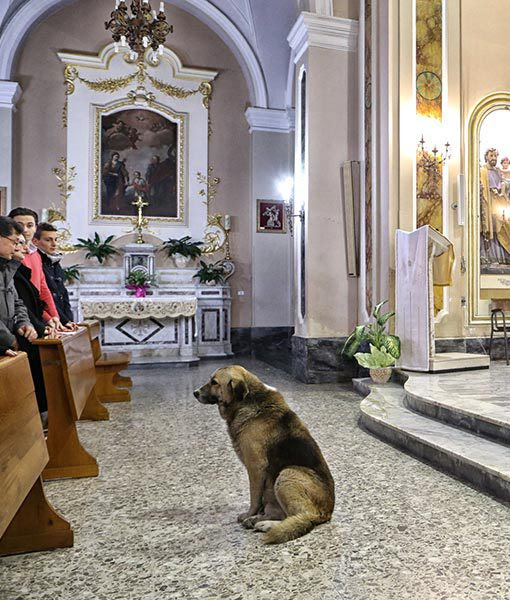
Dog & Love in a Church

I find this both terribly sad and yet wonderfully inspiring at the same time.

Never ever let someone tell you animals do not have feelings and intelligence.

It’s not every day you’ll see a dog in church, but in the small town of San Donaci near Brindisi, Italy, it’s a regular occurrence.

A 12 year-old German Shepherd named Tommy goes to Mass nearly every day and sits patiently by the altar. He goes there out of love, he is just waiting for his master. But the real story behind his reason will break your heart

The reason Tommy attends Mass at this church is because it’s where he last saw his owner.

The reason Tommy attends Mass at this church is because it's where he last saw his owner.

Her funeral was held here.

Her funeral was held here.

Now, he diligently waits for his master to come back. He curls up by the altar to wait for Maria.

Now, he diligently waits for his master to come back. He curls up by the altar to wait for Maria.

Tommy is there every day and waits patiently through all of the church services, keeping a silent watch and waiting for her.

Tommy is there every day and waits patiently through all of the church services, keeping a silent watch and waiting for her.

The loyalty and love dogs possess is unlike anything else in the universe except the reality of “love”.

Source: pawnation.com

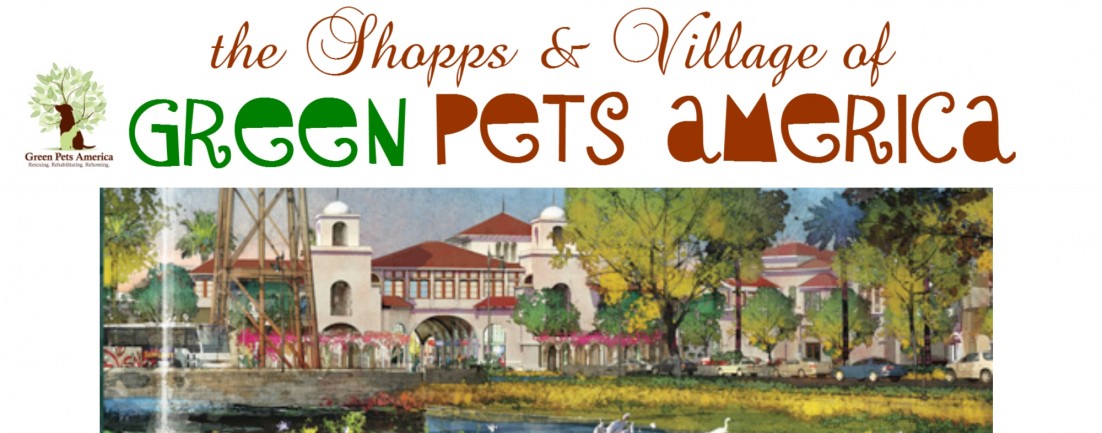
green pets america shops and village picture

Another Vision For No Kill – GREEN no-kill ANIMAL COMMUNITIES

Green Pets America Vision

The Vision of Green Pets America is to extend and link the green movement to the animal welfare movement; to end the dumping, discarding and destroying 4 million healthy and happy companion animals in America’s animal shelters yearly.

If it is the right thing to go green and recycle refuse is it not also as important, if not more so, to go green and recycle happy, health dogs and cats as well.

Our mission is to totally change the animal care system in America by the creation of “Green no-kill Animal Communities”. Regional destination centers that animal lovers will go to adopt, celebrate, care for animals and mingle with one another.

Every year Americans discard 8 million dogs and cats. Our shelters adopt out 4 million and destroy the remaining 4 million. This tragedy must end. We must become a Green Pets Nation. Please join with Green Pets America to advocate for going green!

Americans want a policy of “rescue & recycle” not “discard & destroy”. We can save over 4 million pets annually by recycling, not euthanizing Americas shelter pets. To achieve this goal we are working to open the first green animal community center in Georgia, north of Atlanta.

Green Pets America believes a more intelligent, efficient and humane way to care for shelter and homeless animals in America is possible and has developed a six-part strategy to accomplish it. The SIX Part Strategy focuses on:

  1. GREEN no-kill ANIMAL COMMUNITIES
  2. GREEN SANCTUARIES
  3. ADULT & KIDS EDUCATION
  4. SPAY & NEUTER
  5. COMMUNITY OUTREACH PROGRAMS
  6. ADOPTION STORES

The corner-stone to changing our animal care system in America will be the creation of “Green no-kill Animal Communities”. Regional destination centers that animal lovers will go to adopt, celebrate,care for animals and mingle with one another.

There are numerous places for people to come together to participate in activities they enjoy. For example our county has two aquatic centers for swimmers, a beautiful regional bike trail park for bikers, two YMCA centers, a senior center,two very small 1 acre dog fence parks. There are other facilities based on interest for the community as well. But although over 65 % of the public are animal owners there is really no large significant place for animal lovers to come together for activities and education. We will change that…think Disneyland for animal lovers and their family pets.

Green no-kill Animal Communities®

  • Our first Green no kill Animal Community will be built on 30 acres of beautiful open green spaces with multiple green designed buildings in Cherokee or Cobb County. Picture a fun and beautiful one stop place for all things pets. The 30 acres would be a place for animal and human interaction and physical activities such as dog shows, dog agility events, pet merchandise store selling pet food, pet clothes, pet treats etc. A building for dog training, people animal training, animal welfare education. An adoption store with adoption areas for local shelters and rescue groups to bring their pets for adoption. A food concession stand. A veterinary facility for public animal wellness exams, annual shots and exams. A spay & neuter facility. A green dog park, walking trails and lots of open and wooded spaces for events, fairs and other outdoor animal focus activities. Picture a Disneyland for animals and animal lovers to come together and spend the day together as a community.

About Green Pets America

Green Pets America was founded in 2006. Our  mission is rescue and animal welfare advocacy. We work daily to end neglect, abuse, cruelty and exploitation of animals, ensuring that their interests and well-being are humanely protected as we work to end the 125 year old failed practice of euthanizing 4 million pets annually in America.

Green Pets America is a IRS Certified 501c3 nonprofit. We have been awarded the Gold Star seal for transparency and trust from Guide Star, America’s highest non-profit rating agency. Additionally Green Pets America received the humanitarian recognition from the State of Georgia Senate for serving Georgia’s families and animals.

We are a no kill green recycle and adopt organization, dedicated to finding safe loving homes for all adoptable pets we rescue.  We are proud to be a part of the no kill solution to ending pet homelessness and abuse in America

If you want to SAVE 4 million dogs & cats yearly please join with us. Any donation will make a difference.

We have received the highest level “GuideStar Gold Award” for transparency and trust.

DONATE DOGgximage2 (1)

cropped-gpa-400dpi1.jpeg

Americas new mantra “Rescue & Recycle” not “Dump & Destroy”

2dogs

Our mission at Green Pets America Communities is to end the 125 year old failed practice of euthanizing 4 million pets annually in America’s animal shelters. Every year Americans discard 8 million dogs and cats. Our shelters adopt out 4 million and destroy the remaining 4 million. This tragedy must end. We must become a Green Pets Society. We must “Rescue & Recycle” not “Dump & Destroy”

Please join with Green Pets America to advocate for going green! Rescue & Recycle must be our new animal welfare policy in America:There is a loving home out there for all homeless discarded animals.

Recycle Adopt a Pet

RECYCLE A RESCUE 400DPI

Join the rescue and recycle green pets movement. Green Pets America Communities are made up of animal lovers, rescue groups and elected officials who are working together, not individually to implement the rescue – recycle no kill sheltering movement that has already saved tens of thousands of animals across America. We must create green pets communities across America that control the lives of animals where people live. The day that one shelter manager controls the lives of all the homeless animals in their community is over. That control over life and death cannot be left to our government shelters. That control over life and death of innocent animals must reside with the entire community. That is why we are creating grass-roots Green Pets America Communities, not just single shelters.

dogstich2dogs

 dog chainedDONATE DOG

See Our Green Pets For Adoption

adopt_a_pet_m_logo

We have received the highest level “GuideStar Gold Award” for transparency and trust

← Back

Thank you for your response. ✨

The Benefits of Animals in a classroom

We believe that the hope of a better future for our animals and indeed our whole world lies in the hearts and minds of today’s children.

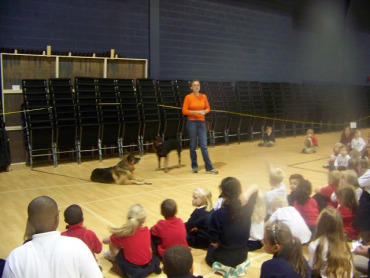
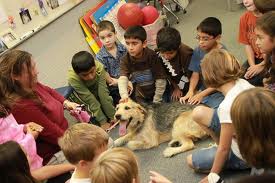
Education as well as rescue is part of our Green Pets America communities strategy to end killing over 4 million animals yearly in America’s animal shelters. We have various education programs including taking Green Pets America rescued dogs into  middle schools, high schools and college classrooms. We talk about animal care, homeless animals and how they can help make life better for animals in their community. It is much more that however. We want to have them learn how to work cooperatively, to learn empathy for animals and one another, and learn to be leaders.

Kids just love seeing and petting our rescue dogs and love to tell us about their own pet.

Green Pets America Communities at Cherokee Charter School

We live today in a new world. An exponentially accelerating changing world. Since the 1800’s that rate of change has accelerated every decade and has now reached exponential rapid change.The old social paradigm was “repetition reinforces repetition” – Think assembly line production, manufacturing and even education of our children.The paradigm shifted dramatically in the late 1980’s s and the world is now suffering through this dramatic change. The new paradigm is the polar opposite of the old repetition, repetition. Change not repetition is the new normal Today change begets new change…rapidly accelerating change.  In just 10 years from now children and adults who cannot adjust and contribute to a constantly changing world and society will be marginalized and stuck in dead-end jobs.We are experiencing that already.  We must immediately change the Pedagogy of how we educate our children, and the social skills they will need to thrive in this exponentially changing world. We believe we can help our children learn new skills and social interaction skills by tying it into fun animal education as well as social skills education.

dogs classroom

Despite the rapid change issues we must deal with in the short-term, the long-term outlook is positive. The future will be a world in which every single person learns how to become a contributor and collaborator and learn the skills; social and functional, to drive change in an exponentially changing world where solutions and opportunities must outpace problems.

boydogbook

Green Pets School Program Mission

Teach and develop children through animals. Focus on the social skills they will need to thrive in the new exponentially changing world.

  • Compassion for Animals
  • Responsible pet ownership
  • Ethical Leadership
  • Social Entrepreneurship
  • Creativity in career, problem solving and social challenges
  • Ethics in life and business
  • Teamwork
  • Empathy for others
  • dogbook

Our Children are our  hope for a better tomorrow. We are a  proud “Partner in Education” participant with the Cherokee County Chamber of Commerce.

Animals in a classroom have shown to dramatically get kids involved in learning. But don’t take my word for it, take look at the results from the 2002 study, “Behavioral effects of the presence of a dog in a classroom.”

  1. With an animal in the classroom children were less engaged in loud, conspicuous, or troublesome behavior.
  1. They paid more attention to their teacher, cooperated better, and communicated more intensely with one another.
  1. Improvements in social behavior were more pronounced in boys than in girls, perhaps because girls showed less boisterous, “rough-and-tumble” activity to begin with.
  1. The teacher’s authority increased, particularly with respect to certain male students, in the presence of her compliant, obedient dog.
  1. The teacher continued to bring her dogs to school the following year. She reported that the effects observed in the study were lasting and long-term.

Help Green Pets America Communities create a better world for our children and animals.

fb icon

← Back

Thank you for your response. ✨

3 WAYS YOU CAN HELP END ANIMAL CRUELTY

dogstich

You have the power to end animal cruelty and spread the no kill movement across America. Help Green Pets America Communities create: Green grass-roots no kill national animal welfare communities across America.

The Humane Society and the SPCA are not 100% no kill. Green Pets America has been rescuing pets since 2006. We have always been 100% no kill. We talk to individuals daily…they call us and want to be sure they are turning in their beloved pet to a no kill group, not a kill shelter. While we are no kill, we cannot take them all in at our one facility. We are always saddened to turn people away and that is why we have started to create no kill green grass-roots communities across America that are 100% no kill:  so no family has to ever turn their pet to a shelter to be killed.

It is our fervent belief that a No Kill nation is now possible in America in this decade. It can only reach full success however by creating grass-roots communities of animal lovers, rescue groups and elected officials who are working together, not individually to implement the no kill sheltering model that has already saved tens of thousands of animals across America. We must create Communities across America that control the lives of animals where people live. The day that one shelter manager controls the lives of all the homeless animals in their community is over. That control over life and death cannot be left to our government shelters. That control over life and death of innocent animals must reside with the entire community. That is why we are creating grass-roots Green Pets America Communities, not just single shelters.

Become part of the “Green grass-roots no kill communities movement” to create no kill green communities across America. Help us create an alternative to killing 4 million family pets yearly in America.

Here are 3 things you can do today to save animals.  

1. DONATE: No amount is too small and please invite others to do the same, and the chain of micro donation will continue and grow.

2. SHARE:  Our website {www.GreenPetsAmericaCommunities.org} on your Twitter, Facebook,  LinkedIn, or any other social network to which you belong.

3.Become part of the rapidly growing ‘Green Grass Roots No Kill Communities movement” and Start your own Green Pets America Community in your city to rescue and educate the public on the no kill movement spreading across America. Visit our page on how to start your own local no kill community. We have Humane Societies in most major cities –  help us open alternative no kill Green Pets America Communities as well.

“If you have men who will exclude any of God’s creatures from the shelter of compassion and pity, you will have men who will deal likewise with their fellow-men.”  – Saint Francis of Assisi

facebook

← Back

Thank you for your response. ✨

Georgia Animal Cruelty Law / Statutes

become-an-hle-officer

A Note about Enforcement: Local , County and state police are generally mandated to enforce all laws, including animal cruelty, even if these laws are not included in a state’s penal code—contact them if you witness animal cruelty, including neglect, or have information regarding an incident of animal cruelty in your area. Please be aware that local law enforcement may have a limited familiarity with animal cruelty issues, so it can be extremely helpful if you are able to cite the specific section of law and provide police with a summary of it to assist them in their investigation.


GA – Alligators – Article 7. Feeding of Wild Alligators GA ST § 27-3-170  This Georgia law makes it illegal to willfully feed or bait any wild alligator not in captivity. Violation is a misdemeanor with a fine of up to $200 or confinement up to 30 days, or both.
GA – Assistance Animal – Georgia’s Assistance Animal/Guide Dog Laws GA ST § 30-4-2 to 4; GA ST § 40-6-94; GA ST § 16-12-120; GA ST § 16-11-107.1  The following statutes comprise the state’s relevant assistance animal and guide dog laws.


GA – Bite – § 51-2-6. Dogs, liability of owner or keeper for injuries to livestock GA ST § 51-2-6 to 7  This Georgia statute represents the state’s relevant dog bite strict liability law.  While the law imposes strict liability for injury to a person, the dog (or other animal) must first be considered “vicious” or “dangerous,” which can be as simple as showing the animal was required to be leashed per city ordinance.  Second, the animal must be at large by the careless management of the owner.  Finally, the person injured must not have provoked the animal into attacking him or her.
GA – Cruelty – Chapter 11. Animal Protection GA ST § 4-11-1 to 4-11-18  The Georgia Animal Protection Act was passed in 2000 and provides for jail up to one year for general cruelty convictions and up to five years for an aggravated cruelty conviction.  The judge is also allowed to order psychological counseling.  The law also encompasses licensing provisions for kennels and impoundment provisions.
GA – Cruelty – Cruelty to Animals GA ST § 16-12-4; GA ST § 16-6-6  This comprises Georgia’s anti-cruelty provisions.  Under the statute, “animal” does not include any fish or any pest that might be exterminated or removed.  A person commits the offense of cruelty to animals when he or she causes death or unjustifiable physical pain or suffering to any animal by an act, an omission, or willful neglect. Any person convicted of a violation of this subsection shall be guilty of a misdemeanor, but subsequent convictions incur enhanced penalties.  A person commits the offense of aggravated cruelty to animals when he or she knowingly and maliciously causes death or physical harm to an animal by rendering a part of such animal’s body useless or by seriously disfiguring such animal.
GA – Dangerous Dog Ordinances – Chapter 8. Dogs GA ST § 4-8-29  This Georgia statute states the standards and requirements for the control of dangerous dogs and vicious dogs; this statute also proscribes penalties for violations of these standards and requirements. For instance, a violation of this article is a misdemeanor of high and aggravated nature; repeated violations of this article is a felony.
GA – Deer Hunting – CHAPTER 5. WILD ANIMALS GA ST 27-5-12  Under this Georgia statute, it is unlawful to shoot, kill, or wound any wild animal held under a wild animal license or permit or any farmed deer for enjoyment, gain, amusement, or sport.
GA – Dog – Consolidated Dog Laws GA ST § 4-8-1 to 45; GA ST § 4-14-1 to 4-15-1; GA ST § 27-3-16 to 18  These Georgia statutes comprise the state’s dog laws and the “Responsible Dog Ownership Law.”.  Among the provisions of the Responsible Dog Ownership Law include a requirement for registration of dangerous dogs as well as the necessity of such owner to carry at least $50,000 in liability insurance.  Owners of these dogs who do not comply with these and other provisions may have their dogs confiscated and destroyed. Any person who violates this article is guilty of a misdemeanor.
GA – Dogfighting – Article 2. Gambling and Related Offenses. GA ST § 16-12-37  Georgia’s dogfighting statute states that any person who owns, possesses, trains, transports, or sells any dog with the intent that such dog shall be engaged in fighting with another dog, wagers money or anything of value on the result of such dogfighting, knowingly permits dogfighting on his or her premises, knowingly promotes or advertises an exhibition of fighting commits the offense of dogfighting. Violation of the law is a felony, with a mandatory fine of $5,000.00 or a mandatory fine of $5,000.00 in addition to imprisonment for not less than one year nor more than five years. On a second or subsequent conviction, such person shall be punished by imprisonment of not less than one nor more than ten years, a fine of not less than $15,000.00, or both such fine and imprisonment. Any person who is knowingly present only as a spectator at any place for the fighting of dogs shall, upon a first conviction thereof, be guilty of a misdemeanor of a high and aggravated nature.


GA – Ecoterrorism – Article 2. Georgia Farm Animal, Crop, and Research Facilities Protection Act GA ST § 4-11-30 to 35  This article is known as the Georgia Farm Animal, Crop, and Research Facilities Protection Act. A person commits an offense if, without the consent of the owner, the person acquires or otherwise exercises control over an animal facility, an animal from an animal facility, or other property from an animal facility with the intent to deprive the owner of such facility, animal, or property and to disrupt or damage the enterprise conducted at the animal facility. Other prohibited actions also include gaining entry where a person knows entry is forbidden. In the definition of “consent,” the act states that the term does not include assent that is induced by force, threat, false pretenses or fraud. It also excludes assent given by a person that the actor knows is not authorized by the owner, or given by a person who the actor knows is unable to make reasonable decisions (e.g., because of youth, intoxication, or mental disease or defect). Violations that involve exercising control over a facility are felonies; those that involve illegal entry or damage less than $500 are misdemeanors.
GA – Endangered – Article 5. Protection of Endangered Wildlife GA ST §§ 27-3-130 to 133  These statutes provide for the definition of “protected” species and outline the duties of the board responsible for enforcing Georgia’s endangered species law.  Included in the Board’s duties are inventorying and designating listed species and promulgating regulations.  Violation of these regulations results in a misdemeanor.
GA – Equine Liability Act – Chapter 12. Injuries from Equine or Llama Activities. GA ST §§ 4-12-1 to 5  This act stipulates that an equine sponsor or professional, or a llama sponsor or professional, or any other person, including corporations, are immune from liability for the death or injury of a participant, which resulted from the inherent risks of equine or llama activities.  However, there are exceptions to this rule:  A person will be held liable for injuries if they display a willful and wanton or intentional disregard for the safety of the participant and if they fail to make reasonable and prudent efforts in ensuring the safety of the participant.
GA – Exotic pets, wildlife – Chapter 5. Wild Animals GA ST § 27-5-1 to 12  These Georgia wildlife provisions embody the General Assembly’s finding that it is in the public interest to ensure the public health, safety, and welfare by strictly regulating in this state the importation, transportation, sale, transfer, and possession of certain wild animals. Animals such as kangaroos, certain non-human primates, wolves, bears, big cats, hippopotamus, and crocodile, among others, are considered to be inherently dangerous to human beings and are subject to the license or permit and insurance requirements outlined in the laws. The section also details specifications for the humane handling, care, confinement and transportation of certain wild animals.
GA – Fur – Article 2. Trapping, Trappers, and Fur Dealers GA ST § 27-3-60 to 73  Under these GA statutes, trappers and fur-dealers must be licensed. Trapping of fur-bearing animals is allowed during open trapping season. Traps must be inspected at least once every 24 hours. Trappers must dispatch fur-bearing animals caught in a trap and release domestic animals. It is legal to set traps to protect livestock and domestic animals from predators, but unlawful to trap upon the right of way of any public road or upon another’s land.  A violation of these statutes is a misdemeanor.
GA – Horse Meat – Article 4. Advertisement and Sale of Meat Generally. Ga. Code Ann., § 26-2-150 – 161  As stated in the legislative intent, the General Assembly declares that purchasers and consumers have a right to expect and demand honesty and fair practices in the sale of meat for human consumption. It is the purpose of this Code to ensure that honest, fair, and ethical practices are followed in the advertising and sale of meat for human consumption. With regard to horsemeat, the Code prohibits the slaughter a horse in this state for the purpose of selling or offering for sale for human consumption or for other than human consumption the horse meat derived from such slaughtered animal unless certain conditions are met. Further, no horse meat shall be sold or offered for sale in this state for human consumption unless at the place of sale there shall be posted in a conspicuous location a sign bearing the words “HORSE MEAT FOR SALE.”
GA – Horses – Chapter 13. Humane Care for Equines. GA ST § 4-13-1 to 4-13-10  This section comprises Georgia’s Humane Care for Equines Act. The act states that it is unlawful for the owner of any equine to fail to provide adequate food and water to such equine; to fail to provide humane care for such equine; or to unnecessarily overload, overdrive, torment, or beat any equine or to cause the death of any equine in a cruel or inhumane manner. The Act also outlines procedures for the care impounded of equines as well as disposal procedures, which includes auction and euthanasia, when the owner cannot be found or refuses to enter into a consent order. Violation of this chapter results a misdemeanor.
GA – Hunting – Article 6. Interference with Lawful Taking. GA ST § 27-3-150 to 152  These Georgia laws comprise the state’s hunter harassment provisions. Under the section, it is unlawful for any person to interfere with the lawful taking of wildlife by another person by intentionally preventing or attempting to prevent such person from such lawful taking of wildlife; engage in activity tending to disturb wildlife for the purpose of intentionally preventing the lawful taking of such wildlife; or fail to obey an order of a law enforcement officer to desist from prohibited conduct. The section also allows the superior court of a county to enjoin prohibited conduct and imposes civil liability on violators.
GA – Hunting – Chapter 3. Wildlife Generally GA ST § 27-3-22  Georgia is unique as it prohibits the killing, possession, sale, and transporting of eagles and other migratory birds except for the transportation of feathers into the state of non-migratory birds for millinery purposes (the making of hats or headdresses).  For discussion of federal Eagle Act, see Detailed Discussion.


GA – Hunting – § 27-3-12. Use of drugs, poisons, chemicals, smoke, gas, explosives, recorded sounds or calls and electronic communication equipment prohibited; misdemeanor violation; penalties Ga. Code Ann., § 27-3-12  This Georgia law prohibits computer assisted remote hunting or providing or operating a facility that allows others to engage in computer assisted remote hunting if the wild animal or wildlife being hunted or shot is located in this state. The law also makes it unlawful to hunt hunt any wild animal, game animal, or game bird by means of drugs, poisons, chemicals, smoke, gas, explosives, recorded calls or sounds, or recorded and electronically imitated or amplified sounds or calls. Violation is a misdemeanor (high) with a fine of $1,000 to $5,000 and/or a term of imprisonment up to 12 months.
GA – Hunting, Canned – Article 4. Shooting Preserves. GA ST § 27-3-110 to 114  Under the Georgia canned hunting statute, it is unlawful for any person to release pen raised game birds, unless the person has first obtained a license. It it unlawful to hunt pen raised game birds on a shooting preserve except between October 1 and March 31, and except from one-half hour before sunrise to sunset. It is unlawful for any person to propagate, possess, or release on any shooting preserve any bird or animal (with exceptions) unless the person has received prior written approval from the department. Licensees must maintain a complete record of all birds propagated, released, or taken on the preserve.
GA – Initiatives and Referendums – 2006 Amendment 2: Proposing an amendment to the Constitution so as to provide that the tradition of fishing and hunting 2006 Georgia Amendment 2 (ballot initiative)  This Georgia constitutional amendment was presented to voters on the 2006 ballot.  The measure preserves the state’s tradition of hunting and fishing for the public good.  Amendment 2 passed by a margin of 81 to 19%.
GA – Ordinances – Jurisdiction and duties of local governments GA ST § 4-8-22  This Georgia statute provides authority for local governing units to enforce this article. This statute further establishes that the local government shall designate an individual as a dog control officer to aid in the administration and enforcement of the provisions of this article; the dog control officer does not have the authority to make arrests unless the person is a law enforcement officer. Additionally, this article also allows local governments to make arrangements with each other for consolidation of dog control services.
GA – Rabies – Chapter 19. Control of Rabies GA ST § 31-19-1 to 10  This GA statute pertains to the control of rabies. Any person bitten by an animal suspected of being rabid must notify the county board of health. The owner of any animal which has bitten any person or animal, or exhibits signs of rabies, must notify the county board of health. The owner must also confine the animal. A violation is a misdemeanor.
GA – Trust for the care of an animal; creation; termination – Chapter 12. Trusts GA ST § 53-12-28  This Georgia law enacted in 2010 provides that a trust may be created to provide for the care of an animal that is alive during the settlor’s lifetime. The trust shall terminate upon the death of such animal or, if the trust was created to provide for the care of more than one animal alive during the settlor’s lifetime, upon the death of the last surviving animal.
GA – Veterinary – Veterinary Practice Code GA ST § 43-50-1 to 91  These are the state’s veterinary practice laws.  Among the provisions include licensing requirements, laws concerning the state veterinary board, veterinary records laws, and the laws governing disciplinary actions for impaired or incompetent practitioners. The chapter was recently amended in 2006.


GA – Veterinary Liens – Article 8. Liens. Part 9. Veterinarians and Boarders of Animals. Ga. Code Ann., § 44-14-490  This section of Georgia laws deals with veterinary liens. Every licensed veterinarian in Georgia has a lien on each animal or pet treated, boarded, or cared for by him or her while in his or her custody and under contract with the owner of the animal or pet for the payment of charges for the treatment, board, or care of the animal or pet. The veterinarian has the right to retain the animal or pet until the charges are paid. There is a ten-day hold period after demand for payment (made in person or by registered or certified mail) until the pet is deemed abandoned and may be disposed of by the veterinary facility.
GA – Wildlife rehabilitation – Chapter 2. Licenses, Permits, and Stamps Generally GA ST § 27-2-22  This Georgia law makes it unlawful for any person to keep sick or injured wildlife without first obtain a wildlife rehabilitation permit from the state department.
GA – Wildlife, transportation – Article 3. Transportation GA ST § 27-3-90 to 94  This GA statute pertains to transporting wildlife. It is unlawful to transport any wildlife taken in this state without a license or permit. It is unlawful to transport wildlife by a carrier unless the person files with the carrier a written statement giving his name and address and the number of wildlife to be transported and specifying that he lawfully took the wildlife. It is unlawful to transport any wildlife (or parts) for propagation or scientific purposes without a valid scientific collecting permit.

 nati doccal dog paw web med