Adopting a Disabled Pet

Nakio

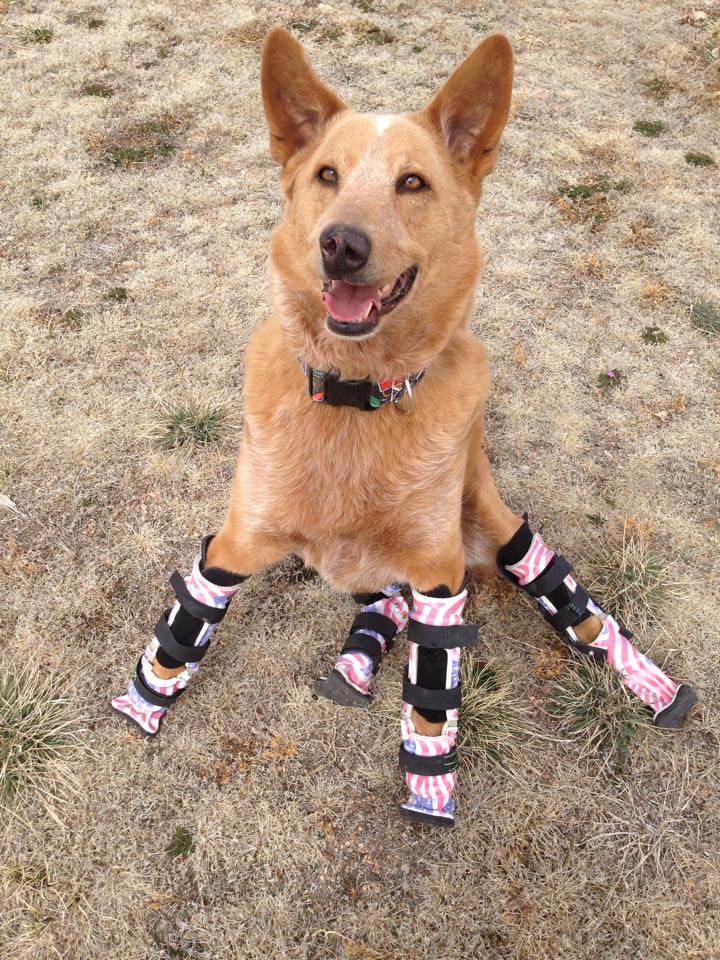
Naki’o lost all four paws and the tip of his tail to frostbite when he was just a puppy. After being nursed back to health at an animal rescue center, he met veterinary assistant Christie Pace, who was looking to adopt an animal who needed help. When she saw Naki’o, she knew he was The One.  She adopted him at eight weeks old and immediately launched a fundraiser to get prosthetics for his back legs.  He did so well with the back leg prosthetics that Orthopets, the company that made them, also furnished him front leg prosthetics for free.  Now Naki’o enjoys life to the fullest and can walk, run, play and even swim!  Just look at that big smile! See more of Naki’o on his Facebook page.

This is a story that demonstrates very clearly that there is a loving home for all pets. No pet should ever be euthanized in an animal shelter because the pet has a disability. Rescue – Recycle – Relove.

cropped-greenpetsamerica-org.jpg

USA National Spay Neuter Law

Mexico City New Law Requires Dog And Cat Sterilization and Microchips.

Do you think this should be considered in the USA as well?

Mexico City has passed a new law requiring that all dogs and cats be microchipped and sterilized. ‘Potentially dangerous’ dog permits will also be required for breeds considered aggressive; such as, Pit Bulls, Rottweilers, and Mastiffs. Dogs permitted as “potentially dangerous’ cannot be walked in public without a muzzle, the Associated Press reports.

Mexico City pet owners, breeders and veterinarians are actively protesting the law which additionally mandates registration (licensing) of all cats and dogs, according to the Associated Press.

The Mexican Dog Fanciers Federation said the law was rushed through in early May without adequate consultation. Veterinarian group and breed clubs are arguing the law could endanger thousands of jobs at clinics, pet salons and breeding and training facilities by causing a sharp drop in pet numbers, according to HNGN.

The most controversial aspect of the law, of course, is the requirement that all pets must be sterilized. Mexico City, with nearly 9 million people, has a serious problem with strays, puppy mills, animal mistreatment and illegal pet sales, the AP reports.

The law is not yet formally enacted but is definitely designed to establish a new level of responsibility for animals and reflects a changing attitude that caused Mexico’s middle-class to spend $2.2 billion on pets in 2013.

The law also requires that collars are worn with visible ID tags, that dogs are leashed in public places; and adequate food, water and space is provided for owned pets, according to the AP.

Two other requirements designed to increase animal and public safety are that trainers cannot work with pets in public, and children under 14 will not be allowed to walk pets without an adult being present, the report states.

CULTURAL CHANGES IN MEXICO REGARDING PETS

An owned dog’s life in Mexico has traditionally consisted of days chained to the roof of the house, says Newsday.

Mexico has an estimated 20 million dogs or more, many of them roaming the streets hunting for food in the trash or spending their days shut up in apartments by owners who see them simply as living burglar alarms.

Last year, the problem gained international attention when authorities said five people had been killed by a pack of feral dogs in the Cerro de Estrella park in Iztapalapa, a poor eastern neighborhood of Mexico City.

LAW INTENDS TO ADDRESS PUPPY MILLS AND ILLEGAL SALES

“The decision to sterilize pets should be voluntary,” said Juan Luis Martinez, administrative director of the Mexican Dog Fanciers Federation.

Breeders who claim to be “legal” say the law violates an owner’s right to breed animals responsibly.

By forcing legitimate facilities out of business, puppy and kitten breeding in the hands of unscrupulous dealers who sell animals out of car trunks or from crates at street markets the AP reports.

Martinez told the AP that the law’s requirements, including fines from about $100 up to as much as $5,000, could encourage noncompliance and lead people to dump more animals in the street and parks.

What do you thinks about this. Should we consider it in America? ….Yes or No?

← Back

Thank you for your response. ✨

Ignorance Kills 4 Million Homeless Pets Yearly

GPACharities.us


We believe that all homeless pets can be saved.

We believe that we must stop killing 4 million homeless pets each year. In this day and age there is no reason that we cannot save them all. 

The only thing that is stopping us is ignorance… Ignorance kills. The antidote to ignorance is education. Education is our vision to create a no-kill America. The only thing that will stop us is good people standing by and not acting.

Please do not stand by any longer and turn a blind eye to the slaughter of the  innocents. Join with us. Help us bring light to darkness. 

Help us educate. Help us save lives. We are your friends, neighbors and community leaders who’ve come together to save lives.

 We are a gold star rated non-profit, recognized for humanitarian services to our communities.

Donate


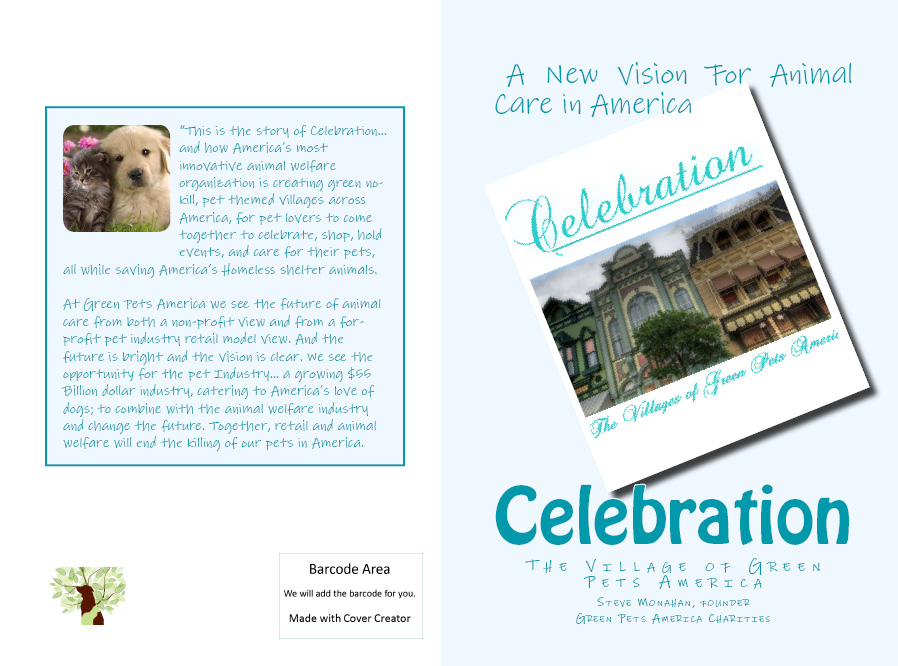
Celebration – a New Vision For Animal Care in America

book celebration

“It’s the story of Celebration… and how America’s most innovative animal welfare organization is creating green no- kill, pet themed villages across America, for pet lovers to come together to celebrate, shop, hold events, and care for their pets, all while saving America’s Homeless shelter animals.

At Green Pets America we see the future of animal care from both a non-profit view and from a for-profit pet industry retail model view. And the future is bright and the vision is clear. We see the opportunity for the pet Industry.. a growing $55 Billion dollar industry catering to America’s love of dogs; to combine with the animal welfare industry and change the future. Together, retail and animal welfare will end the killing of our pets in America.

Book Forward:

We Americans are a kind and caring people. We may differ on many levels but when it comes to our pets we all love them dearly. We intuitively know in deep within our hearts that we have the responsibility to be good stewards of Gods animals.

We understand that the lives of our companion animals are deeply woven into our very being, closer than our own breath. We care for and love them, intuitively knowing that our own lives would suffer if they were not here with us.  Scholars tell us the greatness of a Nation, its people and its moral character can be judged by the way it treats its animals. Americans love animals and want to protect and build a better, safer world for them.

Why do we love them so? Why do so many of us have dogs or cats, or other pets in our homes. On my street alone eight out of ten of my neighbors have a pet. Many have more than one as do my wife and I. It’s a joy to watch everyone out walking their dogs and socializing and bonding together as a community.

So why do we have these companion animals with us? Look around this world, while it is on one hand full of hope, on the day to day side it can often be hectic and chaotic. But pets are our rock and source of unconditional love. No matter what happens in the fast paced outside world during the day, when we come home we know our pets will greet us with a wagging tail and love.

Isn’t it nice knowing someone has been patiently awaiting your return? And on top of that they don’t judge or second guess or criticize us, they just show us love.

There are over 95 million cats and 70 million dogs in American homes. The pet industry is booming. People spend money on their pets as if they were their children; too many if not most of us, we see them as our children. They give us unconditional love in a time when love is hard to come by. Americans spend over $55 billion on pet care. This spending is growing every year, even as other economic sectors decline. Over 63 percent of all households in the United States have a companion animal as part of their family. And financial donations to animal charities are the fastest growing segments in American philanthropy.

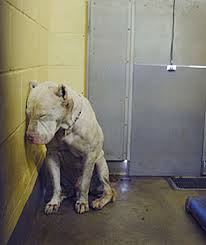
But alas there is another story; one most Americans are not aware of. It’s the story of over four [4] million healthy dogs and cats euthanized yearly in America’s shelters. We share these statistics with people and they are taken back.

Most Americans are not aware of this dark side, of an otherwise bright future for our companion animals. After people learn that we are killing over twelve thousand [12,000] pets daily, four million [4] yearly in our community animal shelters they are appalled. They invariably ask us how do we fix this?

In this book we will outline for you exactly how we will fix this and change the course of pet care in America. We will do it by a hybrid business model of both for profit and non-profit strategies and 21st century thinking.

Why Does The Humane Society Fight Laws That Save Dogs?

We now have a proven solution to shelter killing and it is not difficult, expensive nor beyond practical means to achieve. And the large national animal protection groups should be working feverishly to ensure that the model is replicated in every community in the country. But they are not.

 This article is from Nathan J. Winograd is the director of the national No Kill Advocacy Center and the author of three books on animal shelters. Learn more at nathanwinograd.com.
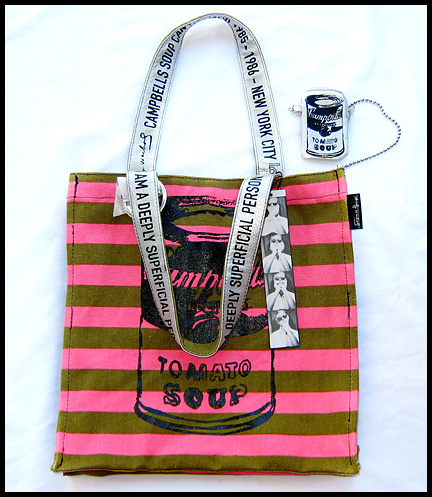
2013-09-26-WarholBag

Several years ago, my wife was given a tote bag purchased at the Museum of Modern Art (MOMA) gift shop in New York City. The bag has an “Andy Warhol” theme, and, therefore, not surprisingly, it also has a sense of humor. It’s made of pink and green striped canvas with a large Campbell’s Tomato Soup can–arguably Warhol’s most iconic work–printed on its front and back. Running up the straps is the famous Warhol quote, “I am a deeply superficial person.” Inside, at the end of a long, silver chain is a soup can shaped coin purse. But the real gem–the pièce de résistance–is what was tucked discreetly inside an inner pocket of the bag: a photocopy of a 1956 letter written to Andy Warhol by the then Director of MOMA Collections, rejecting the donation of one of his drawings.

It’s a masterfully written letter, gracious in actual word choice, but dripping in sarcasm. You can infer just how audacious the Committee considered Warhol to be for daring to suggest that his art belonged in their venerable institution. Little did they know the joke was on them; as Warhol’s paintings have recently sold for as high as $100 million, and MOMA now boasts over 130 Warhol pieces in its collection.

“Last week our Committee… held its first meeting of the fall season and had a chance to study your drawing entitled Shoe which you so generously offered as a gift to our museum,” begins the letter. “I regret that I must report to you that the Committee decided, after careful consideration, that they ought not to accept it for our Collection.” It then goes on to explain that because storage space is limited, they had to decline a work that, in their words, would be “shown only infrequently.” The letter ends with the most ironic post script in the history of letter writing: “P.S. The drawing may be picked up from the Museum at your convenience.” At his convenience?! Where? At coat check?

Given the perspective afforded by hindsight, the letter is, of course, comical. And kudos to MOMA for being able to laugh at, indeed, fess up to, what in the end was a monumental blunder on their part. As art lovers, we can laugh along with the Museum and even appreciate their self-deprecating humor. We can forgive, forget, and move on, because in the world of art, when non-profits such as the Museum of Modern Art screw up, when they become insular, short-sighted, or fail to keep informed or open minded about the evolving field in which they are supposed to be the “experts,” no one dies as a result. Egos are bruised, money is lost, perhaps careers are stalled, but no one dies. And true genius lives on to vindicate itself–and even settle the score–at a later date.

The same, however, cannot be said about all non-profits. For some, the stakes in which they engage are so high, that their advocacy–when ill informed, antiquated and regressive–can have harmful, even deadly results. They, therefore, have a greater responsibility to stay informed and on top of the innovations within their field. They deserve to be–and must be–held to a higher standard. This is why the recent recommendation by the Humane Society of the United States telling animal shelters that whether they choose to implement lifesaving programs or not is entirely within their discretion, is such a betrayal not only of their mission, but, more importantly, the animals on whose behalf they claim to speak.

It is especially intolerable because it has been almost two decades since the cure for the “disease” of shelter killing has been discovered and successfully implemented. Animals enter shelters for a variety of reasons and with a variety of needs, but for over 100 years, the “solution” has been the same: adopt a few and kill the rest. The “No Kill Equation” model of sheltering provides a humane, life-affirming means of responding to every type of animal entering a shelter, and every type of need those animals might have. Some animals entering shelters are free-living cats who are not socialized to humans. At traditional shelters, they are killed, but at a No Kill shelter, they are neutered and released back to their habitats. Some animals entering shelters are motherless puppies and kittens. At traditional shelters, these animals are killed as well. At a No Kill shelter, they are sent into a foster home to provide around-the-clock care until they are eating on their own and old enough to be adopted. Some animals have medical or behavior issues. At a traditional shelter, they are killed. At a No Kill shelter, they are provided with rehabilitative care and then adopted. Whatever the situation, the No Kill Equation provides a lifesaving alternative that replaces killing. And when a shelter puts them all together, and implements them comprehensively, they achieve No Kill.

Through the No Kill Equation, every healthy and treatable animal entering a shelter can have a new beginning instead of the end of the line they face, if those shelters commit themselves wholeheartedly to building the infrastructure necessary to create and sustain a No Kill nation. We do that by institutionalizing the series of programs and services which replace killing and which have allowed for overnight success in the many shelters across the country that have already dedicated themselves to that end; programs like foster care, offsite adoptions, socialization and behavior rehabilitation, thorough cleaning and care standards, medical care both as prevention and for rehabilitation, working with rescue groups, neuter and release, pet retention, progressive field services/proactive redemption, marketing and adoptions, and of course, progressive and imaginative leadership.

Today, hundreds of cities and towns across America are serviced by shelters saving between 90% and 99% of all animals because they are doing so, while some shelters are killing as many as 99% of the animals because they are not. Can anyone with even a hint of compassion actually say it is better to kill baby kittens than bottle feed them? Kill animals rather than promote adoptions? Kill animals rather than work with rescue groups? Of course not, especially since implementing alternatives to killing is more cost-effective, and in many cases, cheaper than killing animals. Tragically, however, many shelter directors have decided that it is better to kill baby kittens, to kill animals despite rescue groups ready, willing and able to save them, and to kill animals rather than keeping them alive long enough to find homes. In fact, some shelters have no adoption hours, are not open to the public for adoptions, and refuse to do any adoptions, choosing to kill the animals instead.

We now have a proven solution to shelter killing and it is not difficult, expensive nor beyond practical means to achieve. And the large national animal protection groups should be working feverishly to ensure that the model is replicated in every community in the country. But they are not. Instead, after admitting that these programs are crucial to save lives, they tell shelters that not only do they “remain at the discretion of each community to choose whether and how to implement” but that they should not be criticized for refusing to do so, while millions of animals continue to lose their lives in shelters every year precisely because those shelters have chosen not to. Worse, they tell activists that they should not try to force shelters to implement those programs, even though doing so would save the lives of the animals they are currently killing. In other words, HSUS is telling shelters that these programs are necessary to save lives, but they do not have to do them and can choose to kill the animals instead.

Today, thanks to activists who succeeded in introducing and passing a law, it is illegal for a California shelter to kill animals when non-profit rescue groups are willing to save them. Before the California law went into effect, only 12,526 animals were being transferred from shelters to rescue groups statewide in a given year. The rest were being killed at largely public expense because many shelters were openly hostile to rescue groups. That number now stands at 58,939–a 370% increase in annual lifesaving, all at no cost to taxpayers. In fact, it saves taxpayers the cost of killing animals and discarding their remains. And since shelters are permitted to charge an adoption fee, it brings in badly needed revenues: potentially millions of dollars annually to shelter coffers across the state. Ironically, this is a law that HSUS opposed and lambasted, in effect telling legislators that over 40,000 additional animals every year were better off dead.

They continue to oppose similar legislation in other states, including Florida and New York, despite surveys showing that 63% and 71% of rescue groups respectively have reported being turned away from shelters in those states, which then turned around and killed the very animals the rescue groups offered to save. When activists sought a San Francisco ordinance to require local shelters to implement alternatives to the killing of dogs and cats for reasons that included being shy, scared, or too fat, HSUS sided with the shelter, explicitly stating that shelters should not be regulated as they are the “experts” who know best. When California sought to roll back protections for animals, HSUS agreed with the decision. And just this month, HSUS and other groups released a report telling California shelters that despite the fact that the programs of the No Kill Equation save lives, they need not implement them, and cautioning activists not to seek legislation that would force them to do so. In short, the decision as to whether or not animals should be saved remains, according to HSUS, a voluntary one.

Why? Having been given a free ride to continue killing in the face of readily-available, common sense and reasonable lifesaving alternatives for so long and to blame others (i.e., the “irresponsible public”) for the killing that they do, shelters do not want to be held accountable. Tragically, they have been allowed to get away with this intransigence because groups like HSUS which should be their fiercest critics for failing to do so, have instead chosen to provide them political cover, revealing a muddled understanding of what should be their mission: acting as lobbyists for the animals who are being killed in shelters instead of lobbyists for the shelters which are killing them.

We cannot achieve nor sustain a No Kill nation unless shelters implement the No Kill Equation, and that means mandating how shelters operate. For No Kill success to be achieved, widespread and long lasting, we must give shelter animals the rights and protections afforded by law. Every successful social movement results in legal protections that codify expected conduct and provide protection against future conduct that violates normative values. We need to regulate shelters in the same way we regulate hospitals and other agencies which hold the power over life and death.

It is time for the animal protection groups to move beyond the stymieing fiction that the entrenchment within the animal sheltering industry to innovation and improvement can be overcome through voluntary, rather than mandated means. Doing so is premised under the most tenacious lie that continues to allow for the killing of millions of animals every year: that all of those working in animal protection will willingly do what is necessary to stop killing, without being forced, by law, to do so if we just educate them on what to do. Not only are the programs of the No Kill Equation well-known and largely obvious, this approach has never worked, and the result has been the needless deaths of millions of companion animals every year. Nonetheless, HSUS and its acolytes pretend otherwise; clinging to their regressive, “deeply superficial” policies, to the animals’ continued peril.
 

Think Disney for Pets

Green Pets America Charities [GPAcharities.us] is an animal welfare organization whose mission is to celebrate the human & animal bond. Scheduled for 2015 we will build America’s first pet community center It will be an animal celebration community.Think Disney for pets. The Community on 20 acres will include.

  1. Events Stadium for indoor and outdoor events.
  2. Pet store selling pet food, pet clothes, pet treats etc.
  3. A store/center for dog training and people animal training.
  4. An adoption store with adoption areas for local shelters and rescue groups to bring their pets for adoption.
  5. Green adoption building for 50 rescue animals available for adoption.
  6. An eco green designed dog themed restaurant.
  7. A state of the art full service veterinary facility for public animal wellness exams.
  8. A pet shots only clinic.
  9. A spay & neuter facility for the public & rescue groups
  10. A full service pet grooming salon
  11. A self-service pet washing store
  12. Green dog park, multiple walking trails, and lots of open and wooded spaces for events, fairs and other outdoor animal focus activities.
  13. Community meeting facility for animal events and educational seminars.
  14. A Large animal themed people park with whimsical animal art.
  15. A pet boarding hotel.

The corner-stone to changing our animal care system in America will be the creation of these regional centers that animal lovers will go to adopt, celebrate with indoor & outdoor animal events, care for animals and shop and mingle with one another.

There are numerous places for people to come together to participate in activities they enjoy. For example our county has two aquatic centers for swimmers, a beautiful regional bike trail park for bikers, two YMCA centers, a senior center,two very small 1 acre dog fence parks. There are other facilities based on interest for the community as well. But although over 65 % of the public are animal owners there is really no large significant place for animal lovers to come together for activities and education. We will change that…think Disneyland for animal lovers and their family pets.Main Street shops 010411-L

  • Our first Pets America Community will be built on 20 acres of beautiful open green spaces with multiple green designed buildings and indoor/outdoor stadium in North Georgia, named Pets America Georgia. Picture a fun and beautiful one stop place for all things pets. The 30 acres would be a place for animal and human interaction and physical activities such as dog shows, dog agility events, pet merchandise store selling pet food, pet clothes, pet treats etc. A building for dog training, people animal training, animal welfare education. An adoption store with adoption areas for local shelters and rescue groups to bring their pets for adoption. A food concession stand. A veterinary facility for public animal wellness exams, annual shots and exams. A spay & neuter facility. A green dog park, walking trails and lots of open and wooded spaces for events, fairs and other outdoor animal focus activities. Picture a Disneyland for animals and animal lovers to come together and spend the day together as a community.

Green Pets America Charities was founded in 2006. Our mission is to celebrate the human and animal bond. We are an IRS Certified 501c3 nonprofit. We have been awarded the Gold Star seal for transparency and trust from Guide Star, America’s highest non-profit rating agency. Additionally Green Pets America received the humanitarian recognition from the State of Georgia Senate for serving Georgia’s families and animals.

UPDATE: 2-07-14. Committee meeting. Next step is finish business plan via additional research. Agreed that preliminary location demographics for population and income indicate Pets America of Georgia will be located north on Georgia 400 just outside Atlanta in Dawson County.

UPDATE: 2-13 -14: National Developer Identified

DONATE DOGgximage2 (1)linkedin

30 Things You Can Do To Save 4 million Companion Animals

dogstich

Every day, more than 11,000 animals are killed in America’s shelters simply

because they don’t have a safe place to call home. But this doesn’t have to

happen.

Here are 30 things you can do to get more animals adopted.

1. Adopt your next pet rather than buying one online or from a pet store

supplied by puppy mills.

2. Spay or neuter your pets.

3. Volunteer at your local shelter or rescue group.

4. Donate to your local rescue group..

5. Tell others about the lifesaving impact of adoption and spay/neuter.

6. Hold a garage sale and give the profits to your local shelter.

7. Share Facebook posts about adoptable animals.

8. Write a letter to the editor of your local paper focused on making your

community no-kill.

9. Tweet about adoption events and spay/neuter promotions with the

hashtag #SaveThemAll.

10. Advocate for lifesaving legislation in your community and nationwide by

joining Voices for No More Homeless Pets at bestfriends.org/yourvoice.

11. Share success stories about rescued animals and rescue groups in your community

12. Participate in a trap/neuter/return program for community cats.

13. Manage a community cat colony.

14. Donate food, toys and other supplies to your local animal shelter or

rescue group.

15. Volunteer to play with and socialize the animals at your local shelter.

16. Walk a dog from your local shelter, with the pet wearing an “Adopt Me”

bandana.

17. Shop at your local shelter’s thrift shop or gift store.

18. Help your local shelter redesign its website or develop new promotions.

19. Get local business owners and clubs to take on a project to help a local

shelter.

20. Collect cans and bottles for a rebate and donate the proceeds to your

local shelter or rescue group.

21. Offer rides to pets going from an animal shelter or rescue group to their

new, happy homes.

22. Foster an adoptable pet.

23. Photograph adoptable pets for your local shelter or rescue group to

promote via social media.

24. Participate in annual local rescue fundraisers..

25. Promote adoption events among your colleagues and friends.

26. Learn about the animal welfare challenges in your community, and

educate others about lifesaving solutions.

27. Fight breed discrimination by advocating for better legislation.

28. Change misperceptions about rescued animals and specific breeds by

spreading the idea that every animal is an individual worth saving.

29. Lobby your local government for fair funding of your community’s

municipal animal shelter.

30. Join Green Pets America.com as a foster parent or volunteer.

GPA_Logo10410

Green Pets America Vision

We are an animal rescue, advocacy and education organization. Our mission is to advance the animal care system in America by the creation of regional no-kill rescue and adoption villages. They will be regional sanctuaries and include villages & shops where animal lovers will go to adopt, celebrate, care for animals, purchase services and products, and mingle with one another and bring their pets with them.Think Disney for pets

pets america proposed shopping center

Each sanctuary & village will include:

  1. Agility Park & Arena for regional animal events
  2. Pet store selling pet food, pet clothes, pet treats etc.
  3. A building for dog training and people animal training.
  4. An adoption store with adoption areas for local shelters and rescue groups to bring their pets for adoption.
  5. Green building for 25 rescue animals.
  6. Dog friendly restaurant
  7. Veterinary facility for public animal wellness exams and annual shots.
  8. Spay & neuter facility for the public & rescue groups
  9. Green dog park, multiple walking trails, and lots of open and wooded spaces for events, fairs and other outdoor animal focus activities.
  10. Community meeting facility for animal events and educational seminars.

_________________________________

We believe the corner-stone to changing our animal care system in America will be the creation of these regional sanctuaries, where animal lovers can go to adopt, celebrate with indoor & outdoor animal events, care for animals and shop and mingle with one another.

There are numerous places for people to come together to participate in activities they enjoy. For example our county has two aquatic centers for swimmers, a beautiful regional bike trail park for bikers, two YMCA centers, a senior center,two very small 1 acre dog fence parks. There are other facilities based on interest for the community as well. But although over 65 % of the public are animal owners there is really no large significant place for animal lovers to come together for activities and education. We will change that…think Disneyland for animal lovers and their family pets.

  • Our Village –  will be built on 30 acres of beautiful open green spaces with multiple green designed buildings in North Georgia. Picture a fun and beautiful one stop place for all things pets. The 30 acres would be a place for animal and human interaction and physical activities such as dog shows, dog agility events, pet merchandise store selling pet food, pet clothes, pet treats etc. A building for dog training, people animal training, animal welfare education. An adoption store with adoption areas for local shelters and rescue groups to bring their pets for adoption. A food concession stand. A veterinary facility for public animal wellness exams, annual shots and exams. A spay & neuter facility. A green dog park, walking trails and lots of open and wooded spaces for events, fairs and other outdoor animal focus activities. Picture a Disneyland for animals and animal lovers to come together and spend the day together as a community.

Green Pets America was founded in 2006. Our mission is rescue, advocacy and reform. We work daily to end neglect, abuse, cruelty and exploitation of animals, ensuring that their interests and well-being are humanely protected as we work to end the 125 year old failed practice of euthanizing 4 million pets annually in America.

Green Pets America is a IRS Certified 501c3 nonprofit. We have been awarded the Gold Star seal for transparency and trust from Guide Star, America’s highest non-profit rating agency. Additionally Green Pets America received the humanitarian recognition from the State of Georgia Senate for serving Georgia’s families and animals.

Every year Americans discard 8 million dogs and cats. Our shelters adopt out 4 million and destroy the remaining 4 million. This tragedy must end. We can save over 4 million pets annually by creating adoption sanctuaries for celebrating, caring for and recycling not euthanizing Americas shelter pets.

Help us advance the animal welfare system in America.

DONATE DOGgximage2 (1)

Another Vision For No Kill – GREEN no-kill ANIMAL COMMUNITIES

Green Pets America Vision

The Vision of Green Pets America is to extend and link the green movement to the animal welfare movement; to end the dumping, discarding and destroying 4 million healthy and happy companion animals in America’s animal shelters yearly.

If it is the right thing to go green and recycle refuse is it not also as important, if not more so, to go green and recycle happy, health dogs and cats as well.

Our mission is to totally change the animal care system in America by the creation of “Green no-kill Animal Communities”. Regional destination centers that animal lovers will go to adopt, celebrate, care for animals and mingle with one another.

Every year Americans discard 8 million dogs and cats. Our shelters adopt out 4 million and destroy the remaining 4 million. This tragedy must end. We must become a Green Pets Nation. Please join with Green Pets America to advocate for going green!

Americans want a policy of “rescue & recycle” not “discard & destroy”. We can save over 4 million pets annually by recycling, not euthanizing Americas shelter pets. To achieve this goal we are working to open the first green animal community center in Georgia, north of Atlanta.

Green Pets America believes a more intelligent, efficient and humane way to care for shelter and homeless animals in America is possible and has developed a six-part strategy to accomplish it. The SIX Part Strategy focuses on:

  1. GREEN no-kill ANIMAL COMMUNITIES
  2. GREEN SANCTUARIES
  3. ADULT & KIDS EDUCATION
  4. SPAY & NEUTER
  5. COMMUNITY OUTREACH PROGRAMS
  6. ADOPTION STORES

The corner-stone to changing our animal care system in America will be the creation of “Green no-kill Animal Communities”. Regional destination centers that animal lovers will go to adopt, celebrate,care for animals and mingle with one another.

There are numerous places for people to come together to participate in activities they enjoy. For example our county has two aquatic centers for swimmers, a beautiful regional bike trail park for bikers, two YMCA centers, a senior center,two very small 1 acre dog fence parks. There are other facilities based on interest for the community as well. But although over 65 % of the public are animal owners there is really no large significant place for animal lovers to come together for activities and education. We will change that…think Disneyland for animal lovers and their family pets.

Green no-kill Animal Communities®

  • Our first Green no kill Animal Community will be built on 30 acres of beautiful open green spaces with multiple green designed buildings in Cherokee or Cobb County. Picture a fun and beautiful one stop place for all things pets. The 30 acres would be a place for animal and human interaction and physical activities such as dog shows, dog agility events, pet merchandise store selling pet food, pet clothes, pet treats etc. A building for dog training, people animal training, animal welfare education. An adoption store with adoption areas for local shelters and rescue groups to bring their pets for adoption. A food concession stand. A veterinary facility for public animal wellness exams, annual shots and exams. A spay & neuter facility. A green dog park, walking trails and lots of open and wooded spaces for events, fairs and other outdoor animal focus activities. Picture a Disneyland for animals and animal lovers to come together and spend the day together as a community.

About Green Pets America

Green Pets America was founded in 2006. Our  mission is rescue and animal welfare advocacy. We work daily to end neglect, abuse, cruelty and exploitation of animals, ensuring that their interests and well-being are humanely protected as we work to end the 125 year old failed practice of euthanizing 4 million pets annually in America.

Green Pets America is a IRS Certified 501c3 nonprofit. We have been awarded the Gold Star seal for transparency and trust from Guide Star, America’s highest non-profit rating agency. Additionally Green Pets America received the humanitarian recognition from the State of Georgia Senate for serving Georgia’s families and animals.

We are a no kill green recycle and adopt organization, dedicated to finding safe loving homes for all adoptable pets we rescue.  We are proud to be a part of the no kill solution to ending pet homelessness and abuse in America

If you want to SAVE 4 million dogs & cats yearly please join with us. Any donation will make a difference.

We have received the highest level “GuideStar Gold Award” for transparency and trust.

DONATE DOGgximage2 (1)

cropped-gpa-400dpi1.jpeg