How To Help a Charity & Get a Big Tax Deduction

Here is an information video on how you can help a charity do it’s work – and for you to get a big IRS tax deduction as well.


If you have a vehicle that is in decent shape and running well please consider donating it to Green Pets America non-profit.

We are an IRS approved 501c3 since 2005. so your donation is 100% qualified

We will use the vehicle at our charity so you will get 100% full retail value as your donation.

We are a Guidestar Gold certified charity.

We have been recognized by the State of Georgia for service to Georgia’s citizens and shelter animals.

You get a full value deduction and you will save the lives of shelter animals as well.

We are in the Atlanta Georgia area and vehicle will need to be delivered to us so you can deduct.

Please use the form below to contact us with your information or any questions you may have.

cropped-gpa-picmonkey.jpg

← Back

Thank you for your response. ✨

Rescuing “Starbucks” the Jack Russell Terrier

Jack Russell Terrier Picture GPA
“Starbucks”

Jill and I were just getting ready to leave Pet Smart about 5:00 pm on a cold Tuesday evening. Our rescue Group, Green Pets America is usually only at this Pet Smart in Canton, Georgia on Sundays, but we were here because I was making a special effort to get one of our lovable rescues a new home. This special rescue was a big scared lab and he needed a permanent home to feel safe and really loved again. So as we left I loaded Sam, the big goofy yellow lab in Jill’s little eco car and walked back in the store to make sure we left nothing behind.

All of a sudden this young guy comes running in with a little white and brown Jack Russell Terrier. The little dog was shaking and his leg was sticking out looking like it may be broken. Jack Russell’s are funny and crazy and always wired up. They all seem to be caffeine hyped 10 Starbucks ahead of all the other dogs we rescue.

The kid asked if I was “the rescue guy” that came on Sundays. I said yes. He immediately said he was in a hurry and was late to work, but I needed to take this dog. He said he was driving to work on the highway right near us and saw this little Jack Russell jump out of a car onto the highway and scamper to the side of the road. So this kid, I was referring to him in my head as “Lying Dude” said he turned his car around and picked him up and drove him here for someone to take him. I know I may seem coarse but we hear all kinds of reasons when someone wants to give up their dog. So I was hoping he was really a Good Samaritan, but skeptical that he may also just want to get rid of his own dog.

As we talked “Dude’s trying to get out of the store as quickly as possible. I’m holding the little scared dog…with his lease attached to his collar. So, I had to ask. When “Jack” jumped out of the moving car, did he have this leash on him at the same time?

He looked at me for a second, kind of dumb founded and said; yup he jumped with the leash as well.  We talked a bit and just as he was leaving I said to him, looks like this poor dog he hasn’t eaten in a while. “Dude” said, no he ate this morning and ran to his car. So much for “Good Samaritan”

The truth is I am glad “Dude” did bring him to our rescue group at Pet Smart. He actually did the right thing. Sometimes “Dudes” abandon their dogs in the woods. Little house trained dogs just don’t survive long on their own. Or had he taken him to a shelter, as an owner turn in, with a broken leg as well, the little guy would probably be immediately euthanized. Many shelters feel if you as the owner turn in your own dog, the dog must have bad issues and they won’t readopt them, they euthanize them. Also, most shelters are community, tax payer funded kill shelters. As such most do not receive sufficient local government funding to surgically fix all the dogs abandoned.

So, “Starbucks” as I started calling him was saved. He was taken to a No-Kill Rescue Group. Our Tag line at Green Pets America is…Rescue – Recycle – Relove. Little Starbucks was now rescued. Over a couple of months in a Green Pets foster home he would be Recycled and made new. And when little Starbucks got adopted, which he did, he became reloved.

If you love dogs, please what ever you can to help your local rescue no-kill groups and local animal shelters. Volunteer at your local community animal shelter, or donate a small amount of money to a local rescue non-profit group like ours so they can rescue more little ones like “Starbucks” and get them Rescued – Recycled and Reloved into new homes.

P.S. Sam, the big goofy yellow Lab I had taken a special interest and took to Pet Smart that day also got adopted. My son Stephen and his wife Trish adopted him a couple of weeks later. He now lives happily after ever with four of their other rescued dogs. It seems rescuing dog’s runs in the Monahan family.

Donate Button


DONATE BUTTON

K 9 Heat Sensor Chip Technology by Virtual Armor

GREEN PETS AMERICA EDUCATION BULLETIN

K 9 Heat Sensor Chip Technology by Virtual Armor

 k9 dog green pets america communities law enforcement memorial

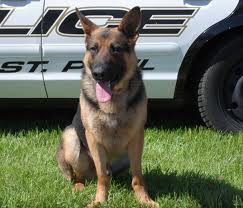
K 9 Clli attentively followed his partner’s every command: scrambling over a mountain of barrels, dashing through a car window and effortlessly clearing an obstacle course despite the triple-digit heat.

“Atta boy!” Officer Howard McDonald said, praising his canine companion as they circled the K-9 district office of the Arizona Department of Public Safety in Casa Grande.

In warm months, vigorous physical activity for a police dog like Clif can warrant concern from a handler: K-9 officers are required to frequently check on their dogs to make sure they don’t become overheated.

But a new program lets DPS officers monitor their dog’s temperature and location with the help of an Android app.

Officials say the technology could also be used to avoid potentially fatal scenarios, like when a police dog is inadvertently left behind in a patrol car in the Arizona heat.

DPS implemented the yearlong pilot program in January using technology firm Virtual Armor and three of the department’s police dogs: Clif, GoGo and Nico.

“With the high drive of the dog, he doesn’t want to stop. We need to pay attention so we don’t run him into the ground”.

  Officer Brian Greene, Arizona Department of Public Safety

 Arizona DPS is one of the first law enforcement agencies nationwide to try out the technology, according to Scott Schulze, senior program and engineering manager for Virtual Armor.

“Our goal is to get as many in place as we can,” Shulze said. “We are certainly going to get practical experience (in Phoenix) this summer.”

The technology involves a device implanted in the dog’s neck with a sensor to monitor body temperature and a GPS component to aid in location. Once the dog’s temperature approaches critical condition, the handler is notified by e-mail or text message. A Virtual Armor app also lets the handler track the dog’s temperature in real time.

Last week, Officer Brian Greene checked on Nico’s internal temperature as the dog practiced biting an officer wearing a thick, black dummy suit. The high that day was 104 degrees.

Greene explained that when Nico gets worked up, the dog doesn’t seem to recognize when he needs to take a break.

“With the high drive of the dog, he doesn’t want to stop,” Greene said. “We need to pay attention so we don’t run him into the ground.”

After Greene saw that Nico’s temperature had reached 102.3 degrees, up from 99, he took the dog to rest in his air-conditioned truck.

“It’s exciting for us in law enforcement to see this kind of technology,” said Capt. Jenna Mitchell, K-9 district commander for DPS. “It allows us to provide an extra layer of occupational health and safety for our canines.”

The initial investment is $6,000 per dog in the first year, which includes the device and related technology.

If the yearlong pilot is successful, Mitchell said, DPS will expand the program’s use to include more dogs on the team.

The technology could be especially relevant during the summer months, when the K-9 dogs — which cost Arizona DPS about $7,000 to buy – and thousands more to train — are at risk for injury or death if left in squad cars.

In the past five years, as many police dogs have died in heat-related incidents as have been shot in the line of duty, according to the Pennsylvania K-9 Assistance Foundation. The foundation says 15 to 18 police dogs die of heat-related injuries each year.

Schulze said his company’s technology could have prevented the death of Ike, an Arizona Department of Corrections K-9 left inside the vehicle of his human partner, Officer Jesse Dorantes, for about seven hours in April. Ike was found dead in the back of the SUV, which had been sitting in 98-degree heat.

An analysis showed that Ike died of cardiac, pulmonary and major-organ failures caused by hypothermia.

Dorantes admitted he forgot about Ike after returning his work vehicle to the Arizona State Prison Complex-Lewis in Buckeye. The officer left work early to tend to a sick child at home.

In Casa Grande, DPS Officer Joey Kretschmer created a scenario where his dog, GoGo, could practice searching for lost evidence. During the 15 minutes they were out in the sun, GoGo’s temperature increased from 100 to 102 degrees.

Kretschmer said the technology was crucial for determining when it was time for GoGo to take a break from the heat.

“We can eliminate a heat problem before it ever occurs,” Kretschmer said. “When we get to a level where we need to bring them out of the field, we can immediately do that and we don’t have to wait until we see signs of heat exhaustion in the day.”

As his partner vigorously sniffed for evidence, Kretschmer was able to monitor his health with the touch of a finger.

“It’s peace of mind,” Kretschmer said. “I get to know that I can focus on my job and let him focus on his job, and the technology will focus on the temperature issue.”


HAPPY RESCUE DOG STORIES – SWEET`PEA

A Very Yappy Ending.Sweet Pea Picture


I often wonder where she was born, what she was like as a puppy and why she became abandoned. She is just the most serene, and cutest pure bred miniature dachshund you could lay your eyes on. Your heart melts when she looks up at you with her big brown eyes. When I am in her company my energy is at peace. Like a clear lake top, peaceful and serene.

Our rescue group Green Pets America rescued Sweet Pea. She was left behind for some unknown reason in her empty home. Worse yet she was abandoned with her two puppies as well. They were just the most beautiful and adorable little family. We’re not sure if her owners were foreclosed on and left the 3 behind or if they went to jail. I can’t tell you how many times this is how we have wound up rescuing a dog.

I and our group used to cart Sweet pea and her puppies, along with a dozen of our other rescue dogs every Sunday to Pet Smart, where we would try to find them new loving homes. It is not easy work rounding all the dogs up, getting their cages in the pickup and cars and unloading them and setting up the puppy play pen and adoption table… but it’s a work of love. It allows us to be with these wonderful rescues and meet fellow pet lovers. And when we get one adopted we’re happy, but also sad to see them go. These little and sometimes big brutes become your kids.

Well after a few weeks both of Sweet Pea’s puppies did find new homes. I’d like to say they lived happily ever after, but one suddenly died shortly after adoption. Seems the little guy, being a nosy puppy opened the door under the families sink and ate some drain cleaner and died. I must tell you we all cried. I just don’t know why things like that happen in life. This poor little guy had a rough start and a rough ending. Thank God however when he was with us, he had a wonderful and happy middle. If you have pets please baby proof your home. These little ones are curious and will always be looking for new adventures. Please, please keep them safe.

Well with both puppies adopted we still had Sweet Pea. My wife started to really bond with her and one Sunday when I was heading off to Pet Smart Lynne said, “if she doesn’t get adopted today please lets take her ourselves”.

Well as life would have it just at the end of the adoption event a woman came up to one of our Directors and wanted to see Sweet Pea. So Susan took her out of the small dog play area. I watched the ladies eyes and in a flash I saw the woman immediately take to Sweet Pea. Adoptions are like that. There seems to be an immediate connection. Well I did something I never did before. I ran over and scooped little Sweet Pea from Susan’s arms. Susan looked at me like I was crazy I guess. But, my heart said that I had to step in and take Sweet Pea home that minute. I just could not bear to possible put her in a situation like what happened to her puppy. After 8 weeks of being with her I couldn’t let her go.

I put her in my car right that minute. After we packed up the pound puppies and big brutes as well Sweet Pea came home to live with us and our other three rescue dogs forever.

I have never regretted my crazy or rude act of sweeping her away and taking her home.

She is the calmest of all our rescues and she’s also the peace maker of the pack. Sweet Pea like all our rescued dogs is a true gift from God. They give everything and ask only for love and protection in return.

For Sweet Pea Monahan and for the whole family it was a Very Yappy Ending...


Steve Monahan, founder

Green Pets America.org

Rescue Renew Rehome

cropped-gpalogo88.jpeg

Please make a donation today.

You will help write another happy ending for a homeless pet sitting in a shelter today.

Donate Button

Did Dogs Come From Wolves?

wolf

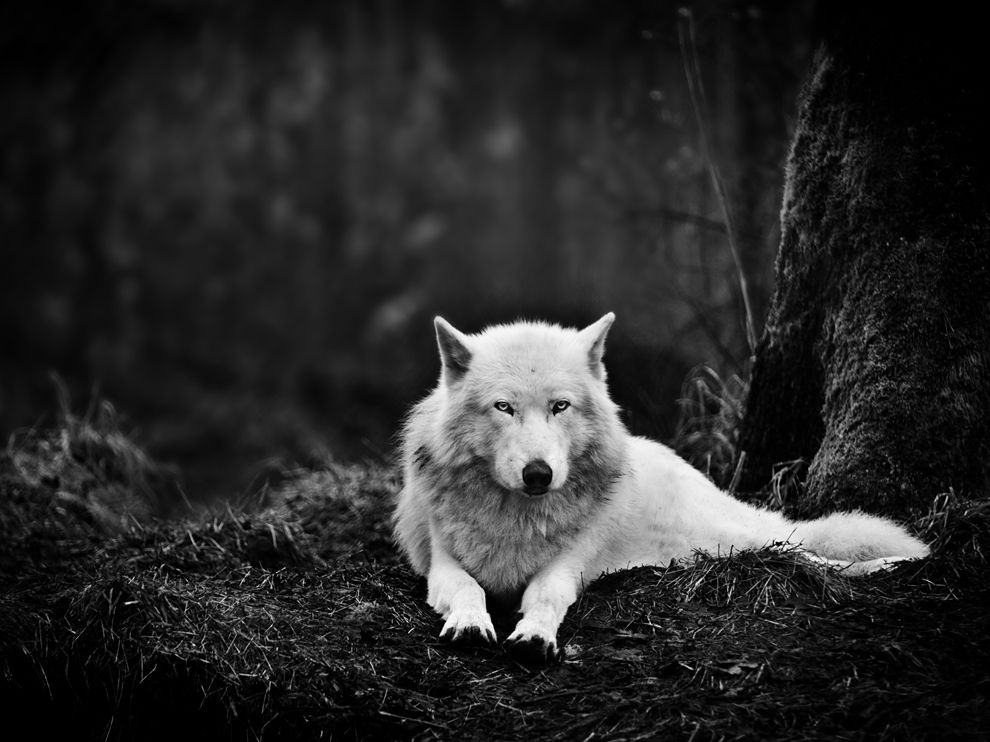
Dogs were probably the first tame animals. They have accompanied humans for some 10,000 years. Some scientists assert that all dogs, domestic and wild, share a common ancestor in the small South Asian wolf.

Today humans have bred hundreds of different domestic dog breeds—some of which could never survive in the wild. Despite their many shapes and sizes all domestic dogs, from Newfoundlands to pugs, are members of the same species—Canis familiaris. Although they have domestic temperaments, these dogs are related to wolves, foxes, and jackals.

Domestic dogs still share many behaviors with their wild relatives. Both defend their territories and mark them by urinating on trees, rocks, fence posts, and other suitable sites. These scent posts serve notice to other dogs that an animal is occupying its territory.

Many pet dogs also bury bones or favorite toys for future use, just as their wild relatives sometimes bury a kill to secure the meat for later feasts.

Dogs communicate in several ways. Scent is one method, another is physical appearance. Body position, movement, and facial expression often convey a strong message. Many of these signals are recognizable even to humans, such as the excited tail-wagging of a happy dog or the bared teeth of an angry or threatened animal. Vocally, dogs communicate with a cacophony of sounds including barks, growls, and whines.

Domestic dogs serve as more than companions; many earn their keep by working hard. Dogs herd livestock, aid hunters, guard homes, and perform police and rescue work. Some special animals even guide the blind—a poignant symbol of the dog’s longstanding role as man’s best friend.

cropped-greenpetsamerica-org.jpg

email sign up


Adopting a Disabled Pet

Nakio

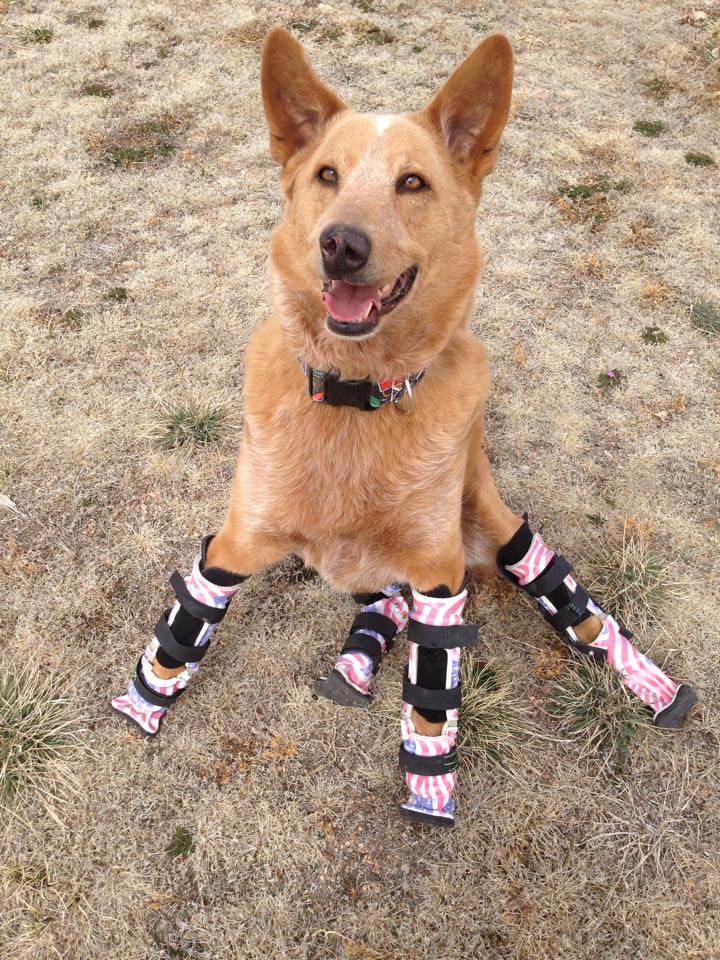
Naki’o lost all four paws and the tip of his tail to frostbite when he was just a puppy. After being nursed back to health at an animal rescue center, he met veterinary assistant Christie Pace, who was looking to adopt an animal who needed help. When she saw Naki’o, she knew he was The One.  She adopted him at eight weeks old and immediately launched a fundraiser to get prosthetics for his back legs.  He did so well with the back leg prosthetics that Orthopets, the company that made them, also furnished him front leg prosthetics for free.  Now Naki’o enjoys life to the fullest and can walk, run, play and even swim!  Just look at that big smile! See more of Naki’o on his Facebook page.

This is a story that demonstrates very clearly that there is a loving home for all pets. No pet should ever be euthanized in an animal shelter because the pet has a disability. Rescue – Recycle – Relove.

cropped-greenpetsamerica-org.jpg

USA National Spay Neuter Law

Mexico City New Law Requires Dog And Cat Sterilization and Microchips.

Do you think this should be considered in the USA as well?

Mexico City has passed a new law requiring that all dogs and cats be microchipped and sterilized. ‘Potentially dangerous’ dog permits will also be required for breeds considered aggressive; such as, Pit Bulls, Rottweilers, and Mastiffs. Dogs permitted as “potentially dangerous’ cannot be walked in public without a muzzle, the Associated Press reports.

Mexico City pet owners, breeders and veterinarians are actively protesting the law which additionally mandates registration (licensing) of all cats and dogs, according to the Associated Press.

The Mexican Dog Fanciers Federation said the law was rushed through in early May without adequate consultation. Veterinarian group and breed clubs are arguing the law could endanger thousands of jobs at clinics, pet salons and breeding and training facilities by causing a sharp drop in pet numbers, according to HNGN.

The most controversial aspect of the law, of course, is the requirement that all pets must be sterilized. Mexico City, with nearly 9 million people, has a serious problem with strays, puppy mills, animal mistreatment and illegal pet sales, the AP reports.

The law is not yet formally enacted but is definitely designed to establish a new level of responsibility for animals and reflects a changing attitude that caused Mexico’s middle-class to spend $2.2 billion on pets in 2013.

The law also requires that collars are worn with visible ID tags, that dogs are leashed in public places; and adequate food, water and space is provided for owned pets, according to the AP.

Two other requirements designed to increase animal and public safety are that trainers cannot work with pets in public, and children under 14 will not be allowed to walk pets without an adult being present, the report states.

CULTURAL CHANGES IN MEXICO REGARDING PETS

An owned dog’s life in Mexico has traditionally consisted of days chained to the roof of the house, says Newsday.

Mexico has an estimated 20 million dogs or more, many of them roaming the streets hunting for food in the trash or spending their days shut up in apartments by owners who see them simply as living burglar alarms.

Last year, the problem gained international attention when authorities said five people had been killed by a pack of feral dogs in the Cerro de Estrella park in Iztapalapa, a poor eastern neighborhood of Mexico City.

LAW INTENDS TO ADDRESS PUPPY MILLS AND ILLEGAL SALES

“The decision to sterilize pets should be voluntary,” said Juan Luis Martinez, administrative director of the Mexican Dog Fanciers Federation.

Breeders who claim to be “legal” say the law violates an owner’s right to breed animals responsibly.

By forcing legitimate facilities out of business, puppy and kitten breeding in the hands of unscrupulous dealers who sell animals out of car trunks or from crates at street markets the AP reports.

Martinez told the AP that the law’s requirements, including fines from about $100 up to as much as $5,000, could encourage noncompliance and lead people to dump more animals in the street and parks.

What do you thinks about this. Should we consider it in America? ….Yes or No?

← Back

Thank you for your response. ✨

What Are Eco Green No-Kill Animal Shelters?

It’s quiet here, even through the hum of activity sun and fresh air stream in. People walk in and out, greeting each other, bending down to pat heads and smile at the little ones. Welcome to the  21st century  no kill animal shelter.
Green BuildingTo the casual observer, an animal shelter may not seem like much of a design challenge: a structure that safely houses stray animals for subsequent adoption.  But start to consider the details of the building. It must hold different types of animals, in differently sized pens, for variable lengths of time. It should be accessible to the public and welcoming to volunteers while maintaining strict health and safety standards. It has limited staff and resources but must relentlessly promote adoption. Day-to-day operations require basic medical capabilities, laundry facilities, storage, and quarantine areas. It must not be too big (causing unnecessary maintenance and staffing demands) or too small (causing overcrowding and/or excessive distress to the animals).

“Because of their unique services, animal shelters must have the disease-prevention components of a hospital, the functional capabilities of a police station, and the user-friendly appeal of a library, ” said Geoffrey L. Handy with The Humane Society of the United States.

no kill animal shelter USA

Historically, shelters have gotten little architectural consideration. The prototypical shelter — a concrete building with individual chain-link kennels — reflects this inattention. Many of these structures were built-in the 1950’s and 1960’s and provided few areas for play, enrichment and human attention. This utterly utilitarian approach reflected the mentality that shelters are mere holding facilities.

no kill shelter USA

Over the following decades, public attitudes toward animal welfare, low-cost spay/neuter policies, and responsible pet ownership evolved. Euthanasia rates dropped from around 24 million pets in 1970 (around 81 percent of those entering shelters) to 6 million (around 58 percent of those entering shelters) in 1996, but shelter directors wanted to drop that number further. They began to think about how facility design could enhance their mission by boosting adoption numbers and creating a better experience for both animals and visitors, and a few architects recognized an opportunity to influence the effectiveness of these organizations from the outside in.

Group (or pod) housing is a newer development with a big, direct impact on the quality of life of shelter dogs. It can take many forms — from modestly sized rooms or kennels that house two to three pups, to shared play spaces that allow caregivers to control how much time dogs spend together and apart. Isolated housing is still used, as it can be beneficial in certain contexts, like with newly admitted dogs undergoing medical or behavioral evaluations.

The Humane Society of Silicon Valley (HSSV), a shelter in Milpitas, CA, recently constructed a new facility (pictured above) they call an “animal community center.” There, temperamentally compatible dogs may be housed in small groups once they pass their medical exams and behavioral evaluations. They live in “real life”-type rooms with proper doors and occasional furniture, which acclimates them to scenarios they will find in new homes when they are eventually adopted. The rooms are designed to insulate noise effectively, reducing stimulation from outside commotion. This isn’t only beneficial to the dogs; it also has a huge impact on visitors, who are no longer overwhelmed by cacophonous howling. Functionally, the real life rooms mean the dogs have less casual exposure to the public, so volunteers are trained to facilitate visits and give potential adopters the tactile experience of meeting the dogs.

While shared, real-life rooms have their advantages, for many shelters they are not an option due to budget, space or staff limitations. For those cases there are other design solutions.

Dr. Kate Hurley is the program director for the Koret Shelter Medicine Program at UC Davis. She advocates dog runs (housing one or more pups) split into two sides by a guillotine door. These runs give shelters greater flexibility. Dogs can be grouped in compatible pairs in the runs, with the doors left open to allow more space to run around. Or, if and when it makes more sense, the guillotine door can be lowered to keep dogs separated. This solution is useful for shelter staff as it facilitates quick and sanitary cleaning protocols, allowing kennel attendants to isolate dogs on one side of the run by closing the door while they clean the other side, minimizing disease contamination. The guillotine door can also be raised and lowered to manage structured play and quiet time, as well as during feedings, to minimize food guarding between pups.

grenbld

Kennels that are divided into two areas — whether real-life rooms or more typical runs split by guillotine doors — have an important added benefit to the dogs’ well-being and stress levels. By creating a space for the pups to eliminate apart from their sleeping and eating area, shelters promote good bathroom habits. A canine has such a strong urge to separate its eating and sleeping space from its elimination areas that, according to Dr. Hurley, around 75 percent of all shelter dogs — even strays — will do this given the opportunity. According to Hurley, this significantly reduces stress and supports a desired behavior once the dog goes to its adopted home.

Additional kennel features create an environment that is easier to clean, manages odors better, and helps control disease. Sealed concrete flooring, for example, saves significant amounts on heating and cooling bills — funds that can be funneled back into animal care. High-density coatings for interior walls and floors withstand pressure hoses and detergent better than other finishes. Kennel areas with plenty of windows that bring in as much natural air and light as possible help reduce odors and create a healthier and more soothing experience for both the animals and their visitors. Observation/isolation rooms with self-contained ventilation systems allow ill dogs to be treated without jeopardizing other members of the population.pet park USA

Better design doesn’t just help the dogs who live there but it’s also beneficial for the people who visit, volunteer, and work at the shelter.

For staff, play and rest areas that keep dogs more comfortable and stress free help create a calmer and safer work environment. Hutchison observes that “real-life rooms, well-designed kennels, and other features help volunteers and staff work with animals in a non-threatening, comfortable environment.”

Facilities that are cheerful, light and welcoming also create a more pleasant experience for visitors who are turned off by the “sad factor” of entering a shelter, expecting to find dogs in prison-like conditions. Kennels with home-like furnishings or enough space for chairs, for example, allow people to interact with the animals more easily and feel comfortable taking the time they need to get to know their potential new companions.

images

Facilities that are pleasant to be in also naturally attract increased volunteer interest. Jeanne Wu, vice president of human resources and volunteering at HSSV, says that the number of volunteer hours given to the organization has grown 40 percent, from 53,000 to more than 74,000, since it moved to its new facility two years ago. The number of volunteers has also increased, by about 50 percent. HSSV values these hours at about $1.5 million per year — an incredible boon to the organization. Wu explains that HSSV, which has 95 full-time staff members, could not maintain optimal levels of socialization, care, and adoptions without altruistic help. Bill Hutchison feels the same way, “Volunteers enjoy being a part of such a progressively designed facility. Having a variety of design functions that address the needs of animals in many different situations is important to volunteers who know that animals in shelters have unique needs.” A dedicated volunteer room with lockers for personal items and a place to sit down, socialize, and relax supports morale and makes the shelter a fulfilling and comfortable place to spend time.

8xlnbpdqedy9xyz9

While designing a shelter that includes enriching features can cost more money, certain elements may save money over the long-term through energy savings, an increase in volunteer numbers and/or hours, or reduced medical expenses. Through the design and integration of better systems for disease-management and stress reduction, UC Davis’ Hurley sees shelters slowly shifting from being primarily adoption centers to places where prevention happens. One day their focus may even transition from finding homes for surrendered pets and strays to providing services — such as low-cost training, behavioral hotlines, and workshops to troubleshoot problems with neighbors or landlords — to help keep animals in their homes, thereby avoiding the shelter system entirely.

donate button

One day we will see no-kill state of the art green movement animal shelters across America –

All things can happen if you believe and if you work towards them.

Green Pets America.org

Rescue Recycle Relove

Donate Now To Help us Build Green No Kill Shelters

Go Green

Daisy the Amazing Dog

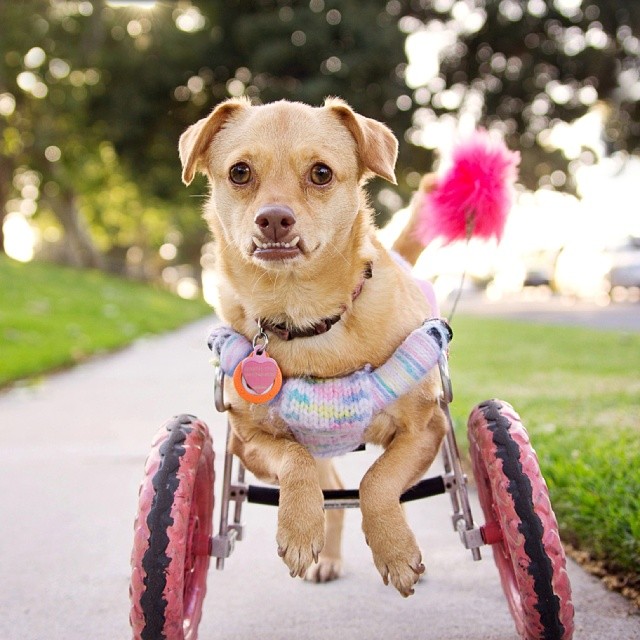
daisy the dog

Daisy was born with paralyzed front legs and twisted wrists and elbows. She was found abandoned on the streets of Bellflower and sat in the animal shelter for two months without an interested adopter. Scheduled for euthanasia, she was pulled by a volunteer with A Home 4Ever Rescue and placed in a home a few months later. Daisy’s owner describes her as happy, and credits her with teaching them that “pets with special needs are not very different from others.” You can follow Daisy on Instagram at #underbiteunite and on her Facebook page.